▲
N
collecting stop
the five collecting journeys
principal roads, modern alignment
◌position approximate
the five collecting journeys
principal roads, modern alignment
◌position approximate
Being an account of the five story-collecting journeys, 1997–2001
Between March 1997 and January 2001 Elizabeth Laird made five expeditions to the regions of Ethiopia with the purpose of collecting folk tales. The project was organised by the British Council with the help of the Ethiopian Regional Cultural and Education Bureaux.
Scroll down to follow the course of the journeys, starting in Bahir Dar in Amhara region. All the storytelling sessions (except those in Tigray) were recorded, some in Amharic and some in one of Ethiopia’s many other languages. You can listen to the recordings under the chapter headings below, and read short accounts of how the stories were collected (adapted from The Lure of the Honey Bird by Elizabeth Laird).
Wax and Gold
A first visit to Bahir Dar, a scholar’s wordplay, and the frightening story that became a lesson against the evil eye.
Written by Elizabeth Laird and adapted from The Lure of the Honey Bird (Polygon 2013).
You might have thought that the capital of the Amhara region would be Gondar, where the ghosts of past emperors seem to inhabit the magnificent remains of castles and palaces, built in the seventeenth and eighteenth centuries. But in fact the administrative capital of Amhara is the much newer city of Bahir Dar.
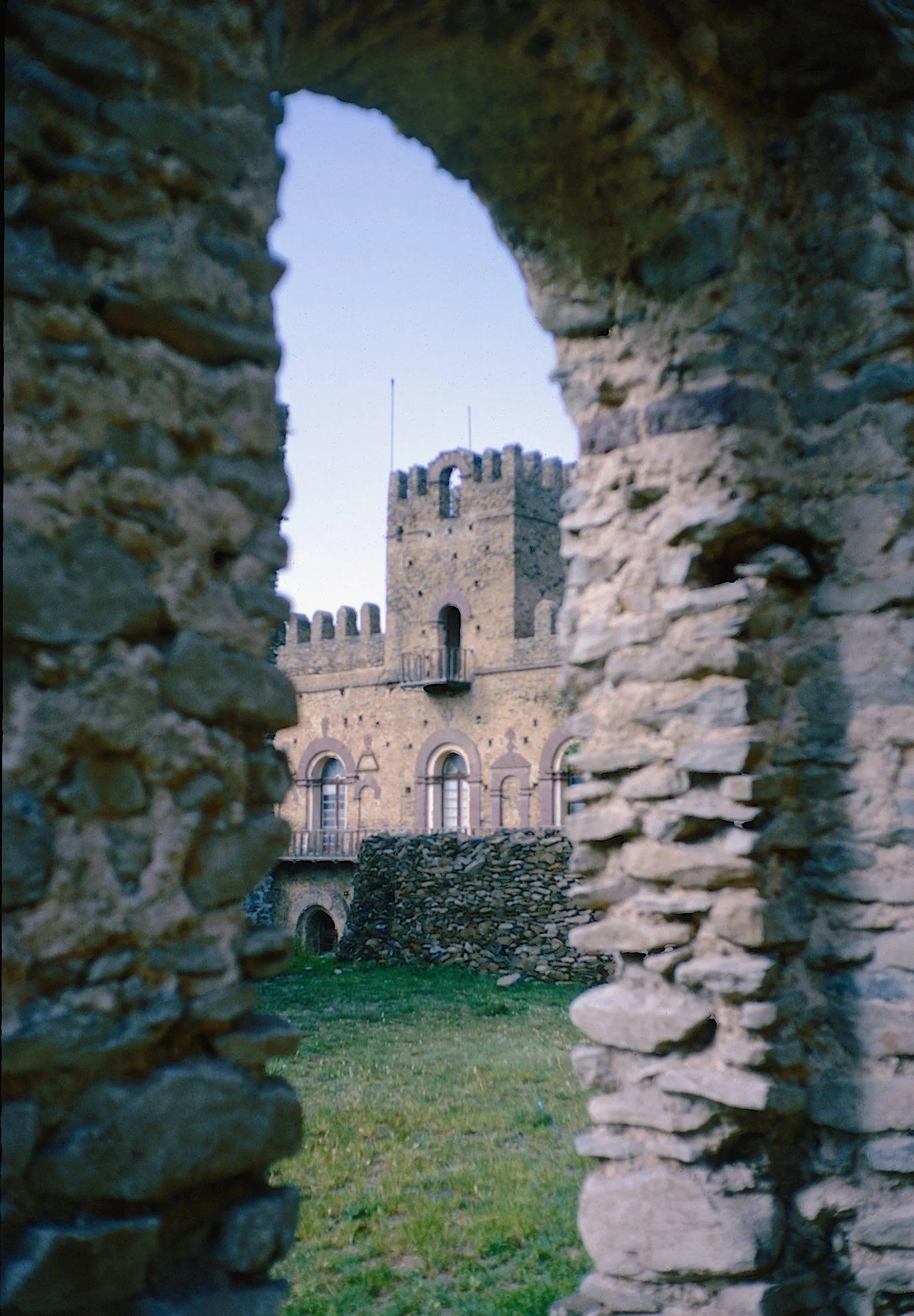
The Solomonic dynasty ruled Ethiopia from the late thirteenth century until Emperor Haile Selassie was overthrown in 1974, though its authority and the extent of the empire changed greatly across those centuries. It held sway over a hugely varied patchwork of peoples. The feudal lords, government officials and soldiers were largely Amharas, and — in their homeland — so were the farmers. Traditionally, in many parts of Ethiopia farmers have held themselves aloof from skilled artisans, such as weavers, potters and metalworkers, who even today are often thought to possess the evil eye. This is not just an Ethiopian belief. Craftspeople in many parts of the world are still accused of having sinister powers. In Scotland not so long ago travelling itinerant metalworkers known as “tinkers” (a name now considered derogatory) were thought to be linked with the fairies. The Beta Israel (Ethiopian Jews) in the Amhara region, who were skilled potters, suffered especially from this superstition, and were falsely accused if a person fell unexpectedly ill.
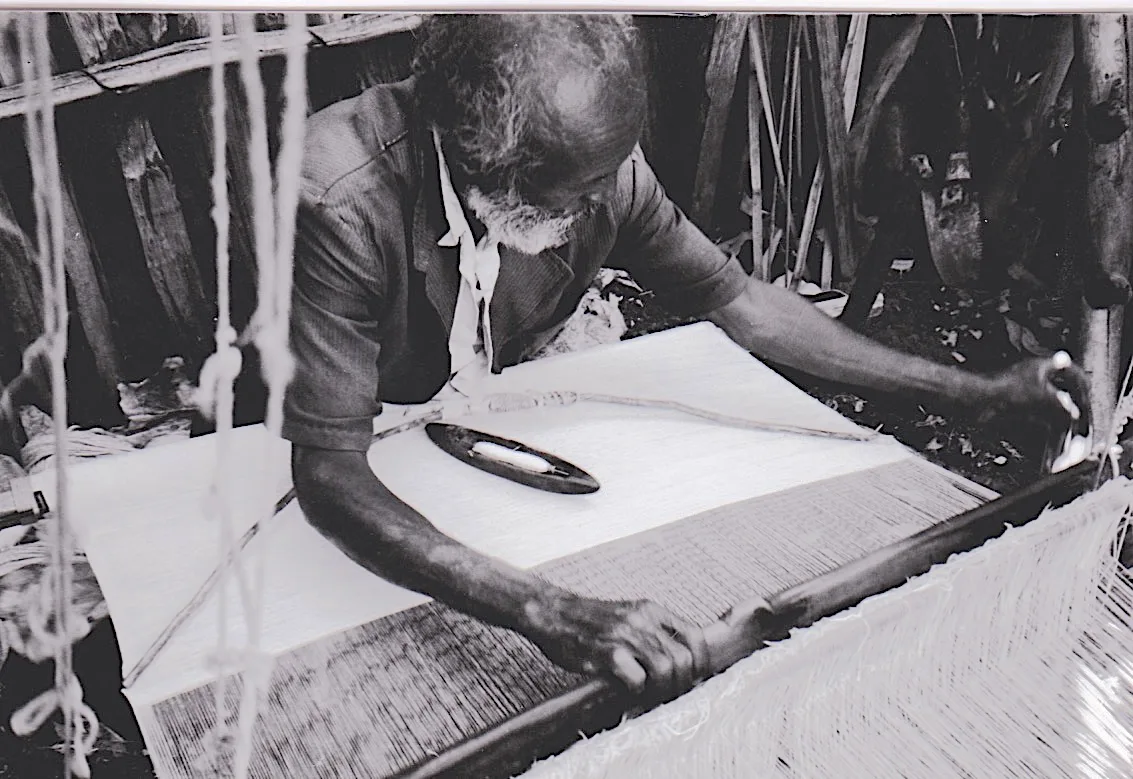
Bahir Dar was the first place I visited in my quest for stories, and I was nervous when Daniel, from the Amhara Education Bureau, took me to meet Ato Shimelash Bequele, my first storyteller.
It took a while for us to be admitted. As we waited in a neat room lined with chairs, I was screwed up with embarrassment. What a cheek to march into someone’s house in the middle of the morning, and demand that they tell me stories!
“Ato Shimelash was a diplomat in the time of His Majesty,” Daniel hissed in my ear. “He suffered very much under the Derg.”
Then I understood why we were being kept waiting. Ato Shimelash belonged to the generation which had suffered unspeakably at the hands of the Derg, which overthrew Emperor Haile Selassie in 1974 and established a Stalinist tyranny, only to be ousted in its turn in 1991. Tens of thousands of people had died in the terror “purges”. A sudden knock on the door and the appearance of strangers must have been unnerving.
When at last we entered Ato Shimelash’s study, he was standing behind his desk. He had the fair skin of a high-born Amhara and his neat white beard gave him a resemblance to the old emperor, who is now revered by many Ethiopians, and is referred to simply as “Majesty”.
The room was lined with books in Amharic and English. A collection of antique Ethiopian jewellery hung from a frame near the window. Behind the large desk, on which stood ivory ornaments, was a bed covered in a handsome woven cloth. It was the room of a scholar.
Ato Shimelash greeted us in perfect English. He had lived in London, he said, in the 1950s. He probed me gently about myself. I’d known one of his former colleagues. My stock rose. I explained my mission. Could he tell us any stories? He wasn’t sure.
“There are some books you should consult,” he said. “I will find some for you.”
Daniel, frisking about on his chair, explained again that we wanted folktales, not literary stories, and urged him to tell a story himself.
After fiddling with his pen for a while, Ato Shimelash at last cleared his throat. Filled with excitement, I switched on my tape recorder.
“It must be in Amharic,” Ato Shimelash warned.
“No problem,” said Daniel. “I will translate later for Mrs Elizabeth.”
And so the first storytelling session began.
Later, as Daniel and I sat in the garden of our hotel, the waters of Lake Tana glinting beside us, I couldn't wait to hear the translations of Ato Shimelash’s stories. What a disappointment! There were only a few fragments of wit, poems and snatches of anecdote.
“Here is one,” Daniel said, his ear to the tape recorder. He wrinkled his brow with the effort of teasing out the convoluted meaning in English. “Her chest looks like the orange of Shenno. And he said, ‘She is mad, let me also be mad.’ There is a double meaning. Mad. It is associated with sex. This is wax and gold, you see. Wax and gold!”
This was getting us nowhere. Ethiopian poetry delights in “wax and gold”,* in riddles, cryptic meanings and subtle interpretations. Ato Shimelash had done his best, but it was clear that folktales were beneath him.
Fortunately, folktales were not beneath the other storytellers I was to meet in Bahir Dar, and the day after I'd said goodbye to Ato Shimelash, I heard one of the most terrifying tales in the whole Ethiopian collection. A man with the evil eye turns people into zombies and makes them his slaves. He is finally caught and driven out of his village. The young storyteller narrated this tale in a low voice and assured me, repeatedly, that it was true.
After he'd fallen silent, I asked him where he'd heard it.
“My mother told it to me.”
“Where were you at the time?” I wanted him to paint a picture for me. He did so, with some prompting.
“At night, when we sat by the fire. She would make sure that the door was shut, because of the hyenas, and pull her shamma over us because we were frightened, and tell us this story to make us beware of people with the evil eye.”
That evening, I met the head of the Amhara Educational Bureau and told him about the zombie man who had been driven out of his village.
“Put it in your book for children,” he said, “but place it in a context where you can show what harm it has done to people, and how false it is. This will be doing everyone a service.”
And so I did.
Read the story as preserved in the original collection: Evil Eyed Man, and in simplified English: The Man with the Evil Eye.
* “Wax and gold” describes a form of double meaning, much admired in Amhara literary culture, which delights in ambiguity, riddles, puns, cryptic meanings and subtle interpretations. The hidden meaning (the gold) can only be understood when the wax concealing it has been melted away.
Pearce’s Pilgrimage
Two visits to Tigray, thirty years apart: first the rock churches, then stories gathered by schoolchildren.
Written by Elizabeth Laird and adapted from The Lure of the Honey Bird (Polygon 2013).
Ethiopia was a very different place in the late 1960s, when I lived and worked in Addis Ababa, teaching English to a generation of clever young men. Haile Selassie was firmly on the throne, and the country was still ruled by the old feudal lords.
The great man of Tigray at that time was Ras Mengesha, an energetic, idealistic and public-spirited aristocrat, who was married to Princess Aida, one of Haile Selassie’s British-educated granddaughters. Ras Mengesha had invited a small but dauntless New Zealander, Ivy Pearce, to lead a team from the University of Addis Ababa to explore and survey the rock churches of Tigray, and I was lucky enough to tag along.
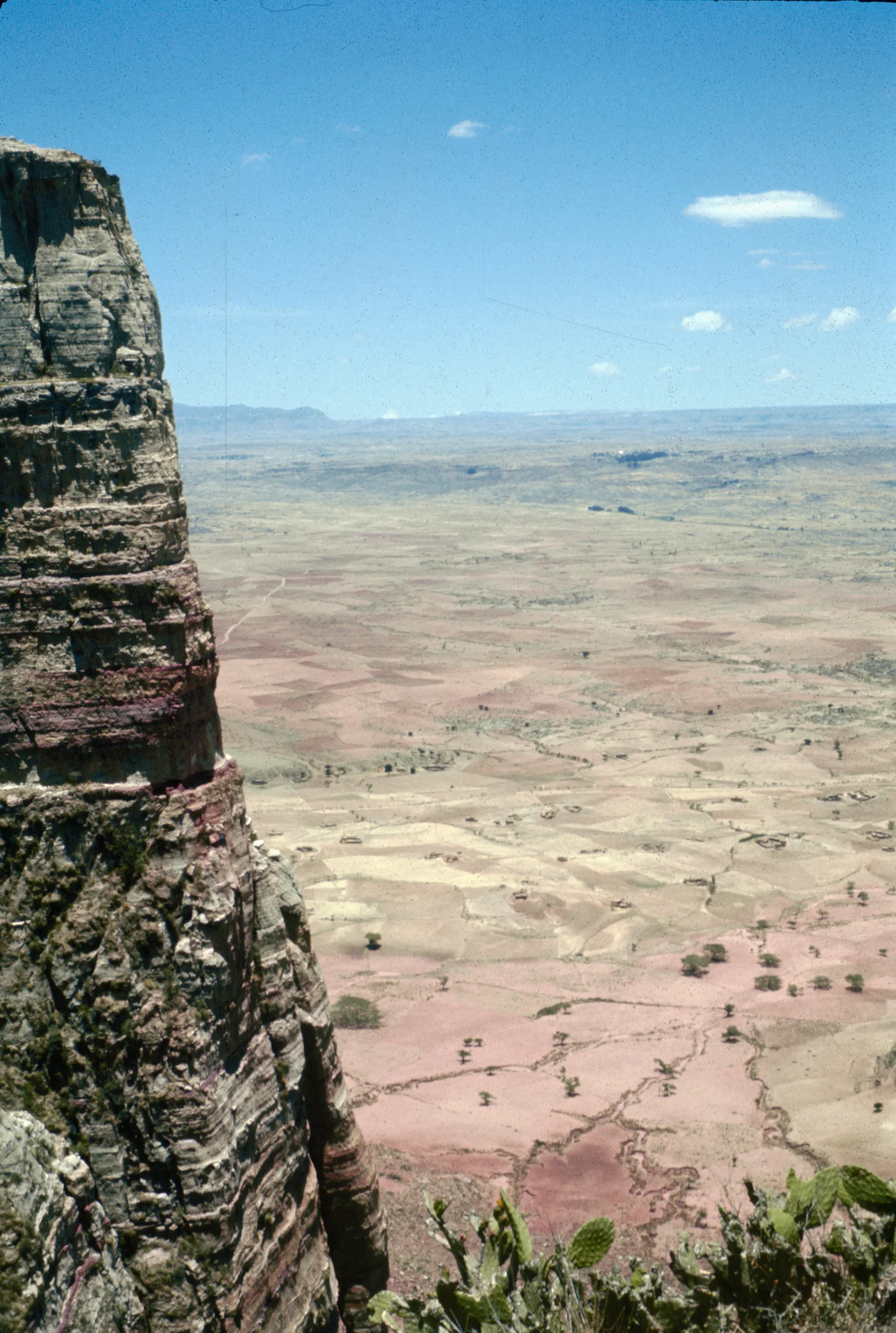
Until quite recently, the rock churches of Lalibela had been thought a unique phenomenon, but as travellers and archaeologists began to explore the northern regions of Ethiopia in the 1960s, more and more extraordinary cave churches had been discovered. Some were no more than crudely hewn holes in the rock face; others were intricate, perfect basilicas carved out of solid stone. In parts of Tigray, sandstone rose from the valley floor in cliffs and spectacular columns, remnants of a long-eroded plateau, and in places it was honeycombed with hidden cave churches, some decorated with magnificent frescoes.
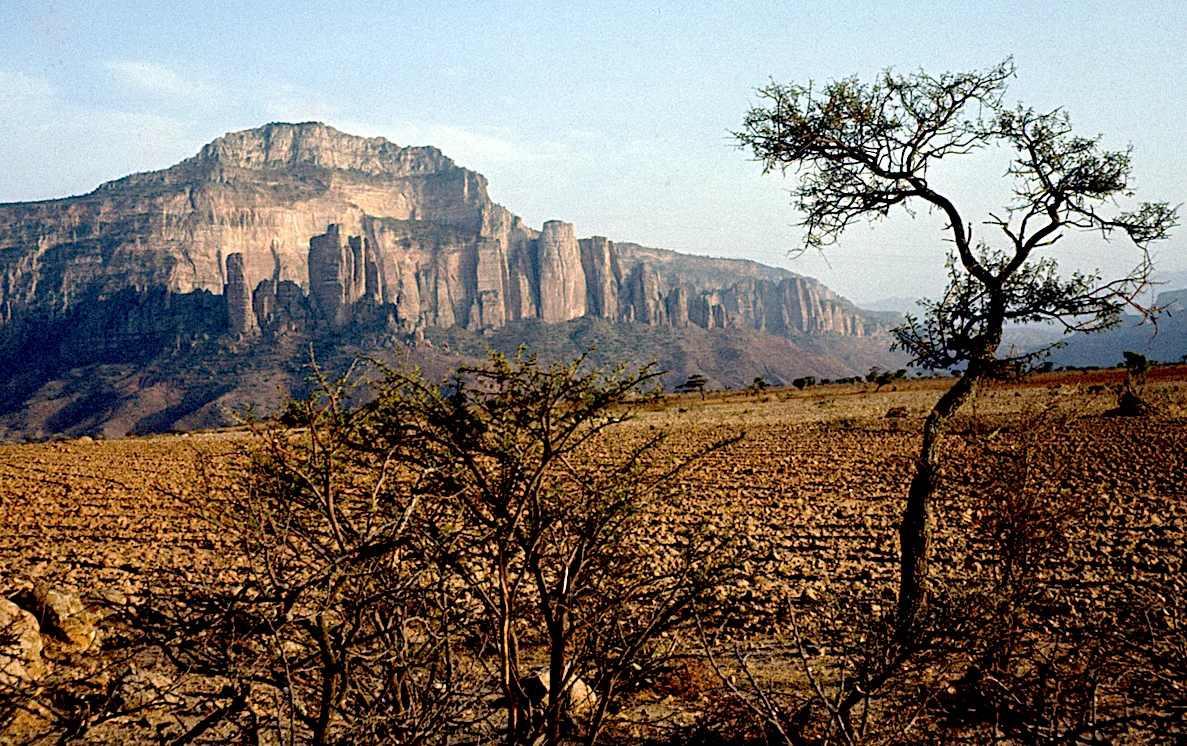
The Ras had provided his own richly embroidered Egyptian tents, Land Rovers, trucks, drivers, cooks, servants and even a waiter. Camp was pitched each night in a different place, and the country people would approach with gifts of eggs, chickens and mead. Every day we walked, climbed, photographed and sketched the as-yet-unexplored rock churches of Tigray, knowing that we were under the special protection of a man who, enlightened though he was, had the power of a great medieval prince.
Thirty years later, when I arrived in Mekelle in pursuit of Tigrayan stories, it took a while to sort things out. Messages from Addis Ababa had, as usual, been lost in the ether. No hotel had been booked, and no one at the Cultural Bureau had any idea who I was.
The young government official tapped his pen on his desk as I spoke, not knowing what to do with me. Then I saw, behind his desk, a poster of one of the rock churches I had visited so long ago.
“I was part of the expedition that Ras Mengesha set up with the university in 1968,” I remarked, “led by Ivy Pearce.”
He dropped his pen and leaned forwards.
“You were on Pearce’s Pilgrimage? But that is famous. I have documents about it here. You know, I am the wrong person to help you. I think it is Ato Mesele you need.”
Mesele Zeleke, Director of the Tigray Education Bureau, was delighted at the idea of the project and very eager to help. He explained enthusiastically that his department had already set up its own project to preserve the folk tales of Tigray. His assistant, Tsehaynesh Gebre Yohannes, had contacted teachers in several schools. Children had been asked to collect stories from their older relatives and set them down in written assignments. Tsehaynesh pulled a sheaf of handwritten stories out of her drawer.
My heart sank. I would meet no storytellers in Tigray. There would be no sense of occasion, no enthusiasm, no colourful voice changes for the different characters, no dramatic pauses, no sing-song rhymes. I would hear the stories at two removes: once in the diligently written versions that the children had submitted to their teachers, and then in Tsehaynesh’s reluctant and stumbling English translations. I realised how fragile oral storytelling is and how easily it can be crushed by the very act of preserving it.
Mesele, seeing that slow progress was being made, took over the translation. Now things went much better. He sat laughing as he leafed through the laboriously written pages, finding storytelling more fun than his daily round of administrative tasks.
“Listen to this one,” he would say enthusiastically. “It’s really good.”
In the end, I had a good collection in my notebooks. There were the usual animal fables, some jokes that didn’t work in translation, stories with plots that hinged round riddles, and several with good plots and casts of characters. The Monks’ Blessing, The Clever Woman and The Forty Dogs were great stories which could hold their own in any collection.
It’s now, incredibly, nearly sixty years since my first visit to Mekelle, when I tagged along on that remarkable expedition to explore Tigray’s rock churches. Sitting at dinner in the Abraha Atsbaha Hotel the night before we set off, I remember hearing the conversation at the next table. The scholars, experts in history and architecture, let their soup cool as they pored over the list of hitherto unvisited churches and historical sites that the Ethiopian historian Abba Tewelde Mesfin Yusuf had made up at the instigation of Ras Mengesha.
“Aksumite influence,” they were saying. “Dating procedures for the frescoes. Measuring equipment. Letters of permission from the district governors. Ropes for the hardest climbs.”
There followed days of thrilling marches up rocky paths, and steep climbs with ropes up fearful rock chimneys. At the end of each burst of exertion we would plunge into the dark interior of one church after another, all hewn by hand from the rock, some walls and ceilings decorated with magnificent frescoes.
Gebre Selassie, who oversaw the daily erecting of our camp and the provision of our meals, became bitten by the exploring bug.
“They have told me something,” I heard him say, his round friendly face beaming with excitement as he pointed with his chin to the group of local people who were following us. “You do not know, but there are forty-four churches in this district. Twenty-two of them are known by this people and you can visit, but twenty-two are hidden like the dream. You go in the mountain, you hear the stone bell and the drum, you look all day for the church but you never find it. All is written in the Bible, all the people know about this, but not even these villager fellows can see the church.”
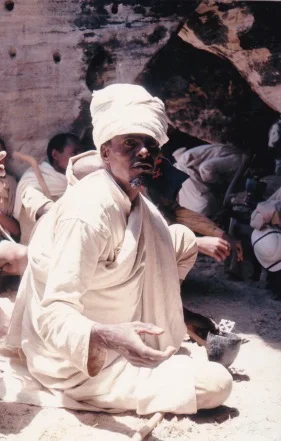
Did I believe him? I wanted to. The thought filled me with excitement.
Thirty years later, I had much the same feeling as I said goodbye to Mesele, who had kindly driven me to the airport. I was certain that there were many more stories that I could have discovered if I had only had the time, and if I hadn’t been so ignorant, a ferenji, able to understand only minimal Amharic, unversed in so much of the culture of Ethiopia.
Perhaps the undiscovered churches of Tigray have been surveyed and mapped by now. They had a good chance of surviving the wars, famines and conflicts that plague Tigray even now. But the stories were dependent on an old way of life, before the advent of TV, the internet and the ubiquitous mobile phone, when people sat together in the evening to talk, tell stories, and muse on their meanings. Their survival, I was afraid, would be much less certain than the churches hewn out of the solid rock.
Read The Monks’ Blessing, The Clever Woman and The Forty Dogs in the original collection.
Politics on the Baro
Two journeys to Gambela, two communities, and a Nuer fable whose political meaning revealed itself in the laughter around the storyteller.
Written by Elizabeth Laird and adapted from The Lure of the Honey Bird (Polygon 2013).
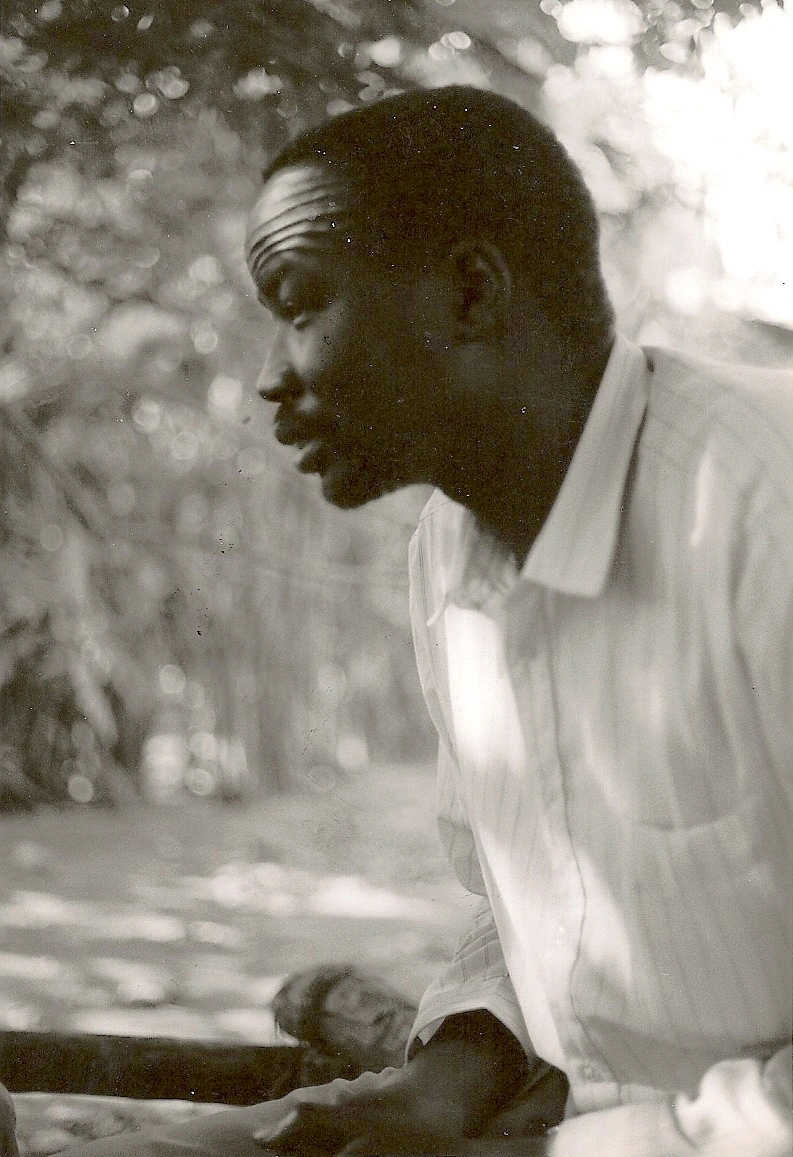
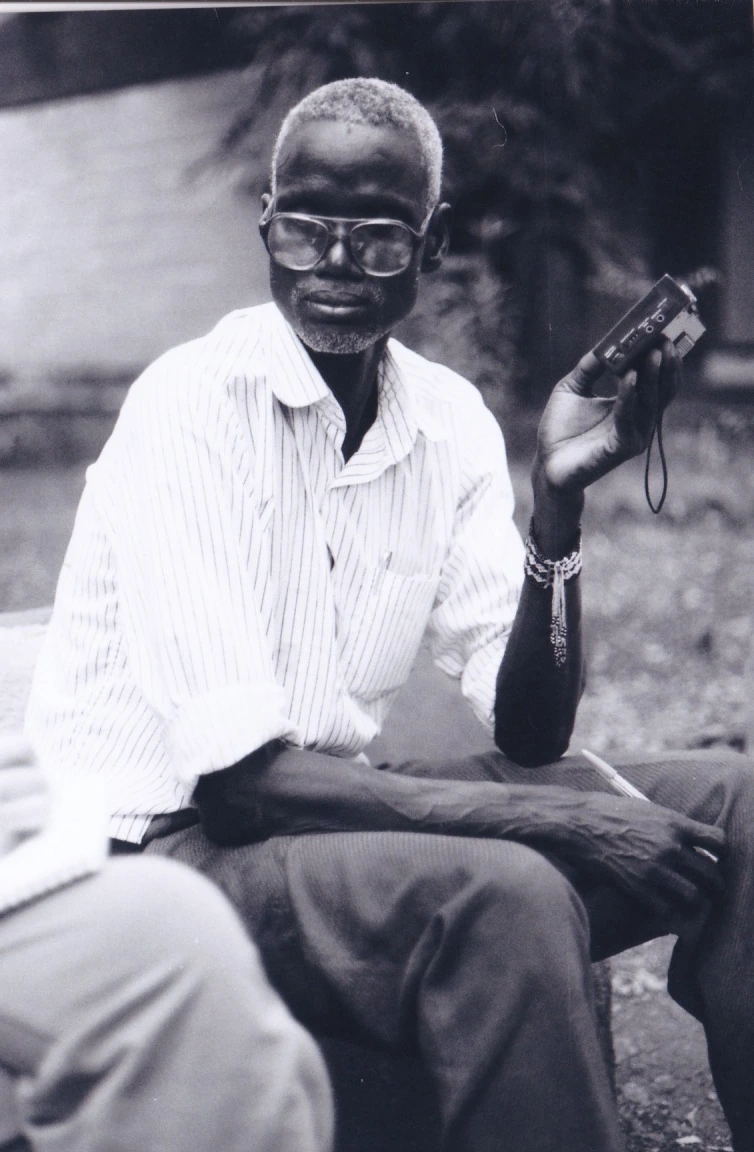
Collecting stories in Gambela was a complicated business. The region, tucked away in the far south west of Ethiopia and projecting into South Sudan, is very different in culture and feel from Highland Ethiopia. Hot, steamy, and covered in luxuriant vegetation, it is home to two major ethnic groups, the Anuak and the Nuer, and three smaller ones, the Majangir, Komo and Opo.
Gambela's history is tragic. For centuries it was the target of raids by slavers from the Highlands. The Ethiopian Emperor Menelik incorporated the region into his empire in 1902, and leased trading rights to the British, who built a small customs outpost on the Baro River. There has long been friction between the settled Anuak farmers and the semi-nomadic Nuer pastoralists. In former times, an old Anuak man told me, these small wars were not so serious because the fighters were armed only with spears and few were killed. But now the region is awash with guns, and a skirmish can become deadly on both sides.
When I visited Gambela, Ethiopia was governed by the Tigrayan-dominated EPRDF (Ethiopian People's Revolutionary Democratic Front). As in other places, I would come across a lonely Tigrayan official, who had been posted to the provinces to keep an eye on what was going on.
In the quarter century since I gathered stories in Gambela, the region has been buffeted by huge changes. The EPRDF government is long gone. Wars across the border in South Sudan have brought large numbers of South Sudanese refugees into this corner of Ethiopia. International companies have bought up land for vast agrarian business, changing the water and forest ecosystems, and the unpredictable effects of climate change are still to come. At the same time, in a major cultural leap, Protestant Christianity has become dominant, with a consequent loss of indigenous culture and memory.
My first visit to Gambela was very short and I flew in on my own, landing on the small airstrip, feeling rather green after the bumpy flight. The Regional Cultural Officer, Ogota Agiw, was Anuak, and during my short visit he and I had time only to collect Anuak stories. We walked for miles in the heat, going from one Anuak compound to another and meeting many old Anuak men (and, at my insistence, a village full of women). In between visits I heard snatches of Ogota's past life as a fighter in the Gambela People's Liberation Front and his years as a refugee waiter in Khartoum. His existence was still full of struggles which were hard for me to imagine.
‘Are you flooded sometimes, when the river is high?’ I asked him, as we walked along the muddy banks of the Baro.
‘Yes,’ he replied laconically. ‘And crocodiles enter my compound. They are malicious.’
I returned a year later in the blessed British Council Land Rover with Michael Ambatchew, the British Council Amharic translator, to collect stories from other groups, especially the Nuer.
Michael efficiently organised a visit to a Christian community centre on the outskirts of Gambela. Here we found a collection of neat round houses, plastered with mud and perfectly smoothed. Some women in Red Cross uniforms were sitting on a mat under a tree, reading to each other. Others were gently beating a drum and singing. The atmosphere was peaceful, earnest and purposeful.
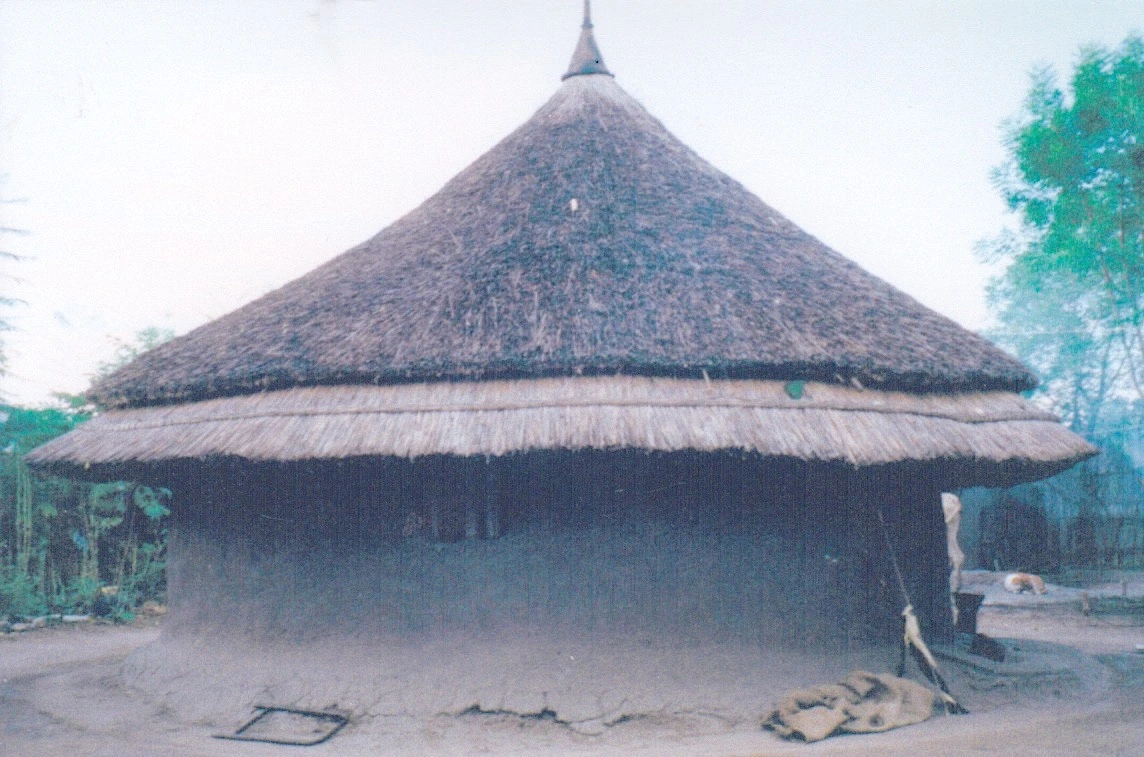
The Reverend James Duot Dol, the handsome, friendly pastor of this Seventh-day Adventist community, came out to greet us. We followed him to a group of waiting men perched on a simple framework of branches in the shade of a clump of trees. Michael, Ogota and I sat down gingerly beside them, and everyone listened respectfully while the pastor told a couple of stories in careful English.
‘And that is why the hyena is a cripple up to now,’ he said at the end of his third tale, which I had failed to fully understand. ‘It is because he swallowed the spoon.’
Silence fell. The row of men shuffled their feet and looked at the ground. Ogota underlined and re-underlined words in his notebook, as was his habit at times of uncertainty. Michael urged the others to have a go.
At last a man called John Kurang held out his hand for the tape recorder.
‘This is the story of the fox,’ he said. The listeners perked up as he began.
When he had finished, there was a ripple of uneasy laughter, and I noticed for the first time that one of the men sitting with us was not a Nuer but a man from the Highlands.
‘Does the story have a meaning? Is there a moral?’ I asked.
Michael nudged me to be quiet. The stranger leaned forwards.
‘Yes, what's the meaning of the story?’ he demanded.
John Kurang smiled back at him innocently.
‘It is to explain the proverb, “the working of the fox's field”.’
‘No. The meaning. What is the meaning?’
‘Just a proverb, as I told you.’
The Nuer men were trying not to laugh but their shoulders were shaking uncontrollably. I have to confess that I hadn't been listening with much attention. I'd been drinking in the prettiness of the scene: the thatched houses set on the bare swept ground, the women clustered round their drum, a few cows lipping over some grass inside a thorn fence. But there was a new tension in the men sitting around me on the branches. What had the story been about? Why was it so important?
It had seemed like a standard animal fable. The fox needs help to harvest his field and he asks the dog, the sheep and the hen to help him. They agree, on condition that their predators, the leopard, the hyena and the hawk, will not be there. But the fox secretly invites their enemies too.
At the end of the day, when the harvest is in, the animals ask the fox to give them the meal he had promised as payment.
‘If you want to eat, look around you,’ he says.
So the leopard falls on the dog, the hyena kills the sheep and the hawk eats the hen.
I couldn't understand the men's reaction to this story.
‘What's going on?’ I whispered to Michael.
‘That guy, he's Tigrayan,’ he hissed back at me. ‘Official.’
Then I saw it. Divide and rule. The fox makes the other animals work for him and consolidates his power by setting them against each other. John's story was not, as I'd assumed, a mild animal fable but a political allegory with a subversive message for modern Ethiopia.
Fables have been used for such purposes throughout history, piercing the complacency of the men in power. The Aesopian fables of Phaedrus are famous for their subtle criticisms of authority figures. In the Bible, Nathan the prophet uses a fable to trap King David into confessing his guilt over his affair with Bathsheba. Faced with the laughter of the listeners, there was nothing the Tigrayan could do but stalk away.
‘Enough. It is enough,’ Ogota said, shutting his notebook and sliding his biro back into the breast pocket of his shirt.
Elizabeth Laird · The Lure of the Honey Bird (Polygon 2013)
What do you see? What do you hear? — Storytelling in Harar
An archive can preserve a story, but does not always bring to life the person who narrated it and the place where it was told. Read here an account of a mourning ceremony in Harar, where Ay Nuria began with the old exchange: “What do you see? What do you hear?”
Written by Elizabeth Laird and adapted from The Lure of the Honey Bird (Polygon 2013).

In Harar, I was invited to meet a group of women, gathered for a mourning ceremony.
Nejaha, the lively young cultural officer, led me between white-washed walls through a network of narrow lanes, our sandals slapping on ancient paving stones, worn smooth by generations of feet and donkey-hooves. Mikhail, our tall, intellectual Amhara translator, followed on behind.
We passed through a battered gate into a small courtyard. Canna lilies grew in old tin cans by the door. Inside the house, two-tiered platforms, covered with rugs and cushions, lined the sides of the room. Fourteen or fifteen women were crammed into every available sitting space. Their bare feet jutted out from the cuffs of their calf-hugging satin leggings as they buried their toes in the peach-coloured rugs.
Mikhail, the only male among these birds of paradise, felt duty bound to take the lead. He cleared his throat and explained our story-collecting project. Everyone nodded, but said we should wait, as their prayers were not completed.
Gauzy shawls were dragged over the women's heads as they settled, and sat for a moment in silence. Then they shuffled into kneeling positions and murmurs filled the room. They were all making the same gesture, pointing with a forefinger, then flicking their other fingers back and forth as if counting something off against their thumbs.
I had time to take in the decorations hanging on the whitewashed walls — framed Koranic texts, wreaths of pink plastic flowers and Harari baskets decorated with cowry shells. A steep stair rose to a low-ceilinged mezzanine floor above.
The prayers were soon over. Each woman picked up her neighbour's hand, kissed the back and the palm, then turned to look at me. Room was made for me on a small square of carpet beside the first storyteller.
She was plump and middle-aged but still beautiful. Her forehead was high, her cheeks round, and her skin the colour of pale milk coffee. A drift of yellow gauze covered her head and shoulders underneath which she wore a velvet skullcap fringed with sequins. Many small rings pierced the rims of her ears, and from behind them dangled two stuffed velvet baubles the size of tennis balls which were overlaid with gold netting. Her top dress was made of heavy white satin dotted with green flowers, and round her neck hung a string of amber beads as big as plums, and another of ivory beads the size of coffee beans. A heavy silver necklace fell over her breasts. Her name was Ay Nuria.
She started with one word, chanted high and loud.
“Riori!”
“What does it mean?” I whispered to Nejaha.
“It is in the Harari language. It means ‘I see something.’”
“Minteri? Mintesami?” the other women sang back.
“What do you see? What do you hear?” Nejaha translated.
The ritual introduction over, Ay Nuria began to sing her story. She finished each sentence with a long-drawn out vowel, and the women sang the sound back to her. Soon, though, she stopped singing, and, in a speaking voice, acted out the characters in the drama, her waving arms threatening to knock the tape recorder out of my hands. Once or twice, someone tried to interrupt her, but Ay Nuria surged on until at last she came to an abrupt stop, and subsided against the hard pink cushion behind her.
I hadn't understood a word, but I had been enthralled. I was crammed so close to my neighbours that their veils fluttered against my skin. They smelled of spices, breast-milk and perspiration. Now I put aside the tape recorder and groped in my bag for my camera, but when they saw it, the women shook their fingers. No photographs. All I could do was try to imprint scene after scene on my memory.
That evening, as we sat under the trees in the garden of the Ras Hotel, Nejaha translated the story from Haderi into English, with Mikhail's help.
A brother falls in love with his sister and plans to marry her by force with the collusion of her parents. A little brother overhears them plotting and warns the girl. When the older brother tries to seize her she throws hot pepper into his eyes and runs away. She crosses a river and hides in a tree. A prince sees her and falls in love with her.
She says, “If my spit lands on you and turns to gold, I will marry you. If not, I will not.”
She spits and hits the prince. The spit turned to gold, so they marry. One day, the parents and the older brother, poor and weary, arrive at the prince's house. The girl lets them in and gives them food, clothes and water. And so the story ends on a note of forgiveness and reconciliation.
Nejaha didn't approve of this ending.
“My grandmother tells the story in another way,” she said. “The parents and the bad brother, they try to cross the river and the crocodiles eat them. Only the little brother lives, because the tree bends down and saves him. They don't come along begging at the end and get forgiven.”
She made me write her version down too, sure that it was the “correct” one.
You can read the original translation of this story, and listen to Ay Nuria telling it here.
Stories Were for Grown-ups
A storytelling session in Assayita, the energy released by a bundle of chat, and a visiting storyteller asked to explain Beauty and the Beast.
Written by Elizabeth Laird and adapted from The Lure of the Honey Bird (Polygon 2013).
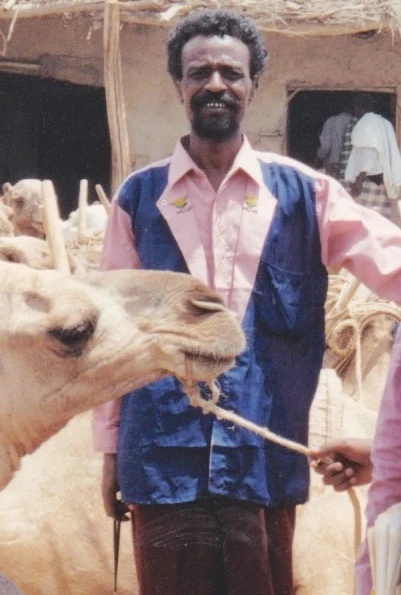
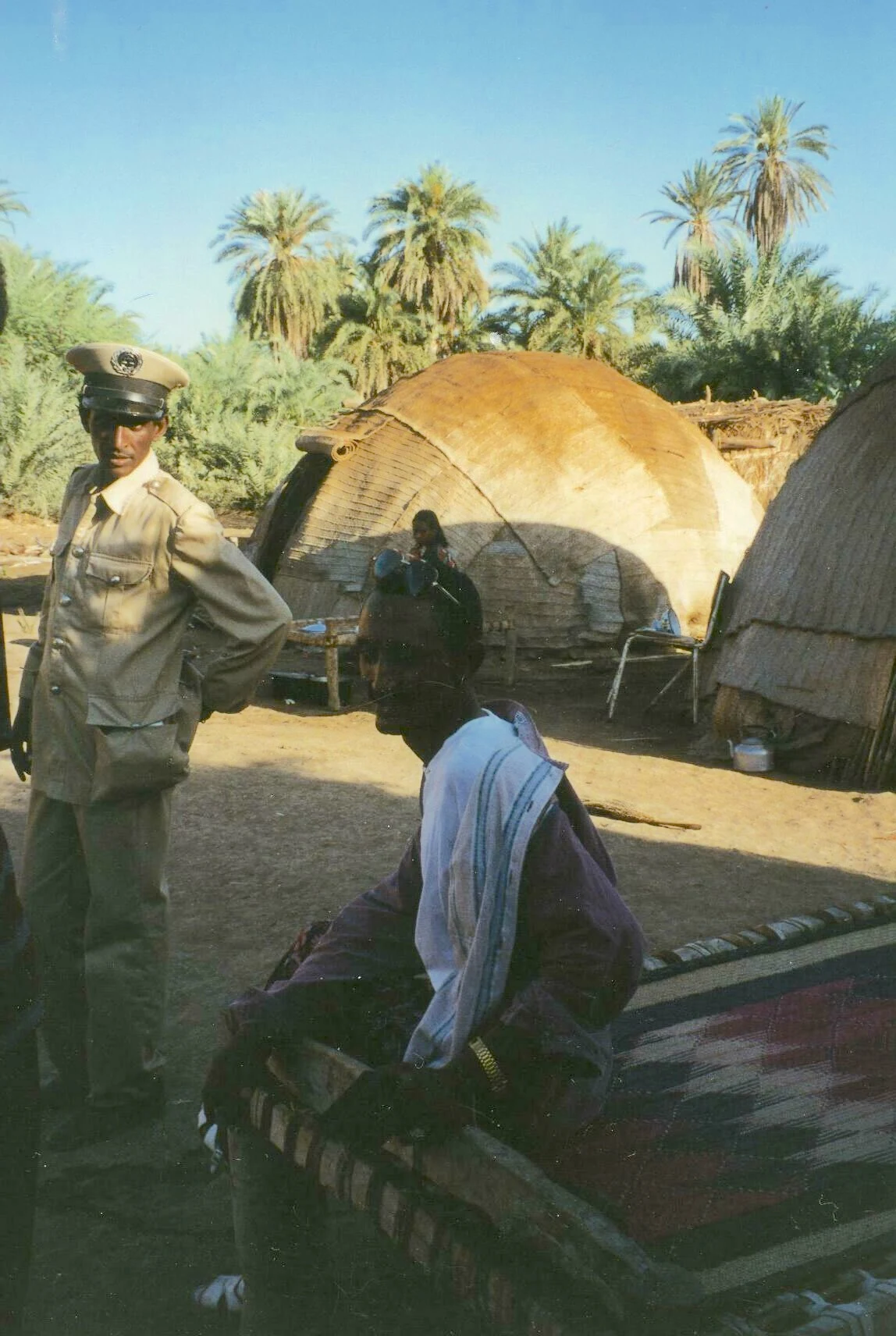
The Danakil Depression, which runs through the Afar region, is one of the planet’s harshest places in which humans live. At Dallol in the northern Danakil, the annual mean temperature has been recorded as the highest on Earth. The bare, gritty ground, scarcely relieved by scrubby thorn bushes, glitters with minerals. From a hillside you can look down on fields of white salt so dazzling that they hurt your eyes. You have to be tough to live in Afar.
It was a long, hot descent from Addis Ababa to Assayita, then the capital of the Afar region.* As we drove into the scorching heat, it seemed impossible to believe that people could eke out a living here, but occasionally we would see through the dust-caked windows of the British Council Land Rover a woman walk out from nowhere into nowhere, or a man lead a camel through a cloud of dust. Set on a low cliff above the Awash River, which was destined to end its life in evaporation in a salt lake, Assayita was hot, dry and very different from other parts of Ethiopia.
Michael Ambatchew, the translator on this journey, managed with some difficulty to find Mohammed Ahmed Algani of the Regional Education Bureau and overcome his initial bafflement. We sat in his stifling small office as men slowly assembled, curious to find out who we were. The conversation being entirely in Afar, Michael and I could only wait.
Then, without warning, a man in a white skull cap launched into a story. He was sitting beside Mohammed, who rested a hand on his shoulder to encourage him. The others leaned forward to listen, setting up a chanting repetition of the last vowel of the final word whenever the narrator paused for breath. If they had been talking in English, it would have sounded like this:
“Once upon a time…”
“Aiee.”
“There was a beautiful Afar girl…”
“Urr.”
“And she was in love…”
“Uh…”
After a while, Mohammed suggested that the session should move to his house. There was a pregnant pause.
“I think they want to chew chat** and they’d appreciate it if you’d buy it for them. Best quality,” Michael said.
If I had a qualm about spending British Council money on drugs, it was only momentary. I disgorged 100 birr, a large sum, and Mohammed sent someone off to buy an ample supply.
A while later, we were sitting on one of the padded mats set around the walls in Mohammed’s small, two-roomed house. The bundles of chat twigs, neatly rolled in flower-patterned cloths, were laid out on the floor. I leaned back against a bolster and, to show willing, nibbled a leaf. I had no intention of chewing it properly. The last time I’d tried it my heart had raced with terrifying speed and I hadn’t been able to sleep all night. The men had been chewing for some time before we’d arrived and everyone was on fire with inspiration. Mohammed’s gold incisors flashed with every smile and his slim hands sliced through the air as he talked. Fatumah, his wife, sat near the doorway with her little tray-table of coffee cups, her light draperies fluttering round her in the gentle breeze. I would have no chance to ask her for stories. I have often wondered what she might have told me. As so often, I was only to be in the company of men.
Mohammed was in charge of the show. Stories were offered for his decision, and it was only on his nod that his deputy would stand up, pick his way across the tangle of legs, discarded chat twigs, bottles of water, ashtrays and coffee cups which littered the floor to hold the tape recorder to the next storyteller’s mouth, recording first the Afar version, then Mohammed’s Amharic translation.
My favourite story from Afar is of a young bride who has a foolish husband and father, and who is pursued by a would-be lover. There’s a delicious sense of jeopardy as she appears to flout the strict code of Afar custom, and a perfect comic denouement when she turns the tables on all three men. Read The Hunter’s Bride.
There was a lull. Michael turned to me.
“They want you to tell a story.”
“I don’t mind if I do,” I said, taking a swig from a bottle of luridly coloured sweet soda, and I launched into Beauty and the Beast.
It would have been impossible to find a more appreciative audience. The men sucked air noisily through their teeth, sighed at the sad bits and smiled at the happy bits, their eyes glued to my face as I spoke. Michael translated sentence by sentence into Amharic, while Mohammed chipped in with Afar explanations from time to time. A little crowd of children had crept up to the back door of the house and were crowding round to listen. Fatumah rounded on them and shooed them away. Stories were for grown-ups in these parts.
“What is the meaning of the story?” Mohammed asked, when at last, with sighs of satisfaction all round, Beauty had been united with her transformed lover.
“I don’t know,” I said. “It’s a story.”
“That won’t do,” said Michael. “You’ve got to tell them what it means.”
“OK.” I thought for a moment. It was easy really. “It’s about the power of love. Even an ugly person is beautiful in the eyes of the one who loves.”
This was accepted with nods and sentimental sighs, and a discussion ensued which of course I couldn’t follow. It only ended when the next story began.
Soon after, Michael decided that we had had enough. The effect of the chat had intensified and the mood was becoming ribald.
The stories I collected in Assayita reflect the Afars’ traditional way of life, moving from place to place to find grass and water for their camels, cattle and goats. But the nomadic life, never easy, has become increasingly precarious as the climate changes, the rains fail, grazing vanishes, government and commercial schemes seize the best pastures and political tensions sweep across the Horn of Africa.
These days, like everyone else on the planet, most Afar herdsmen, camel drivers, traders (legal and illegal) and chat sellers have a mobile phone on which they can listen in to the world’s seductive chat. No doubt some of the better-off women do too. Do they still sit for long hours to chew and talk? It was in Afar that I sensed that the storytelling tradition was more alive than in any other part of Ethiopia. I hope it still is.
Read The Hunter’s Bride in the original collection and The Hunter’s Wife, its Readers adaptation.
* The capital of Afar moved to the new city of Semera in 2007.
** The stimulant chat, as it is known in Ethiopia (khat or qat in other regions) is a major part of life in Afar, Somalia and Yemen. The leaves of this woody shrub, when chewed, produce a sensation of euphoria, followed by sleepiness.
Everything Passes
Two remarkable storytellers beside Lake Hawassa—and a Wolayita tale whose refrain has followed Elizabeth and David through life.
Written by Elizabeth Laird and adapted from The Lure of the Honey Bird (Polygon 2013).
The fortunes of the Sidama and Wolayita peoples have waxed and waned over many centuries. Living side by side, they were squeezed by the dominant Amhara and Tigrayan cultures to the north and the powerful Oromo to the south, but they maintained their own local customs, laws and religions and were ruled by their own leaders and royal houses. The Ethiopian emperor Menelik, an ardent expansionist, incorporated Sidama into his empire in the early 1890s. Wolayita held out until 1894, and was only conquered after its king, Tona, was defeated in a bloody campaign.
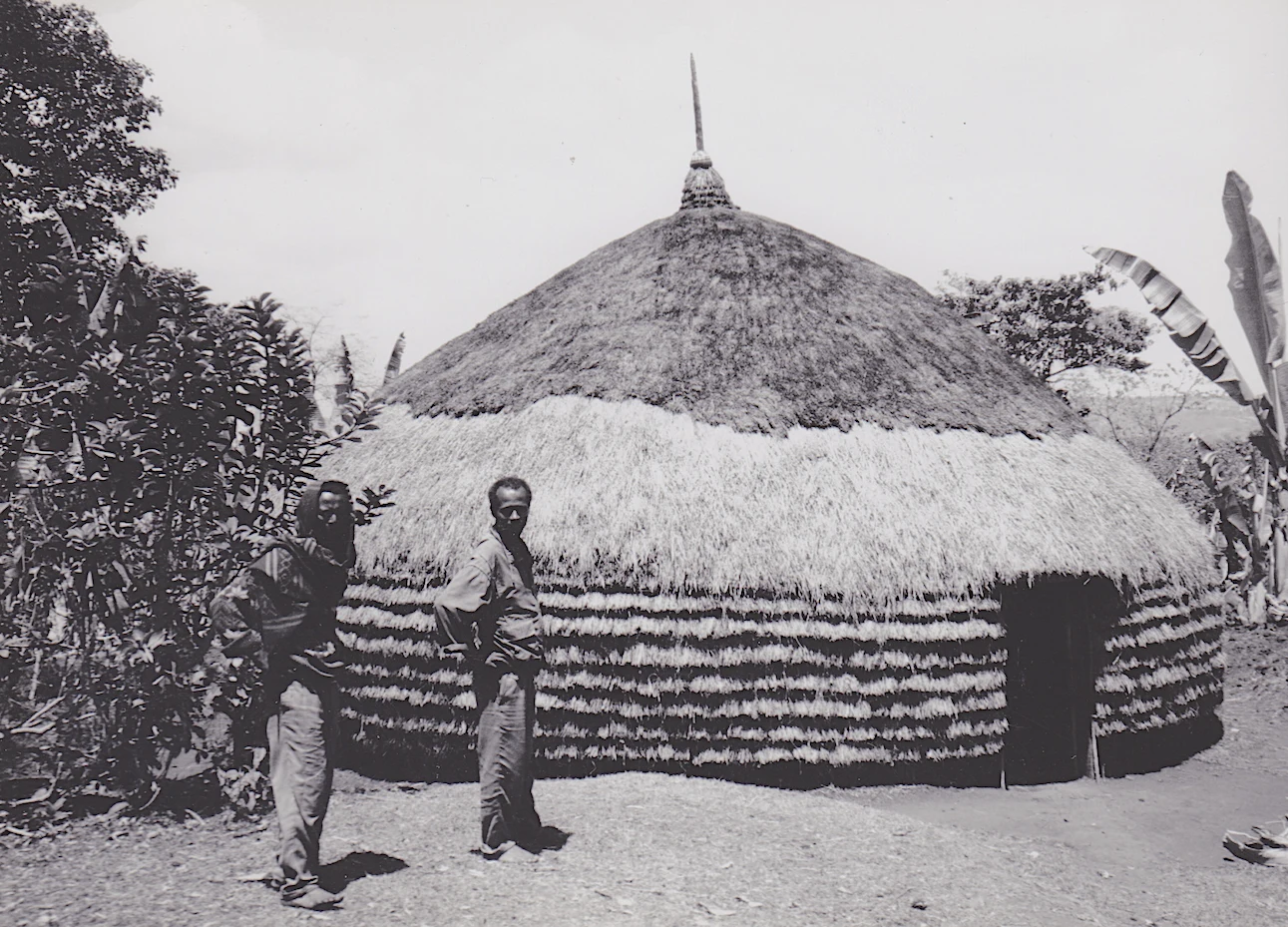
Huge changes have affected the area in recent times. Missionary activity hastened the decline of traditional beliefs, and Protestant Christianity now predominates in both communities. At the same time, the population has grown rapidly since my visit thirty years ago, intensifying the pressure on land and livelihoods. Forests have been cut down to provide fuel, pastureland is overgrazed and soil erosion is depleting the fertility of farmland. Many people struggle to find work. Sidama produces some of the world’s best coffee—a major export for Ethiopia—but climate change is creating ever-increasing uncertainty as rainfall and temperature patterns change.
I was fortunate. In 1997, when I visited Awassa (now Hawassa), in Sidama, Ethiopia was enjoying a period of peace, and tourism was thriving. Foreigners were coming to see the beauty of the rolling landscapes, ornithologists were attracted by the spectacular bird life and historians were interested in the standing stones dotting southern Ethiopia, whose dates and meanings archaeologists are still investigating. I was, of course, attracted by the rich oral heritage of Sidama and Wolayita.
I was lucky, too, in the pair of remarkable storytellers, Abebe Kebede, from Sidama, and Yisahak Aldade, from Wolayita, who came to tell me stories.
There was only one place where stories could suitably be told and that was on the shores of the magnificent Lake Awassa. We settled ourselves on stool-sized rocks of pumice, common in this volcanic region. Pebbles of the stuff were bobbing about on the water.
I relaxed against the soft grey boulder at my back. Kingfishers with scarlet beaks whipped past my nose. A flock of starlings chattered in a bush. Leggy marabou storks clacked their bills as they hopped about their messy nests in the tree overhead. Further away, a family of colobus monkeys lolled on the branches of a fig tree.
Abebe Kebede began the session. He spoke quietly, murmuring his stories into my tape recorder. It’s not surprising that several of his tales featured kings and queens. Sidama history has lived on vigorously in its oral culture, and, as is the way of folk tales, the characters of its former rulers had become strange and larger than life. Read Queen Fura. My favourite of the Sidama stories is The Shield of Kindness, in which the rivalry between three brothers—a common theme in folktales—centres on who performs the kindest deed.
When Abebe’s fund of tales had run dry, it was Yisahak Aldade’s turn to narrate Wolayita stories. Unlike Abebe, he gave a full performance every time, throwing out his arms, leaping to his feet and subsiding again. He shouted and whispered. He imitated the calls of birds and grunts of animals. He sang the rhymes in a fine voice.
Many of Yisahak’s stories held echoes of ones I was familiar with. There was the queen who tries to seduce her husband’s servant, then casts the blame on him when he spurns her, just as Potiphar’s wife did in Genesis, chapter 39. There’s a version of that old favourite, Chicken Licken, which is much funnier—and a bit ruder, too—than our corny nursery version: The Sky is Falling. But the story of Yisahak’s that I remember best comes back to me often. It shows a quiet acceptance of life and death, which has great poignancy when one thinks of the situations of so many Ethiopians today.
Here it is:
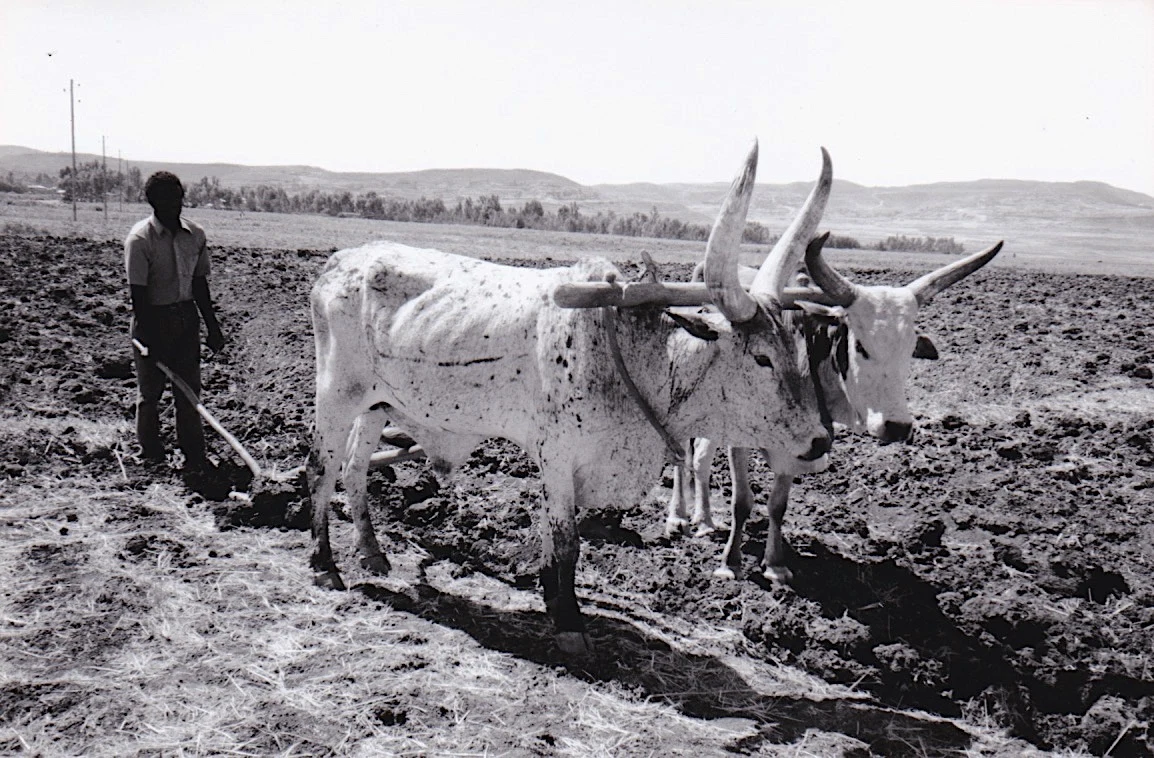
A merchant, travelling with his goods, saw a farmer who had yoked his slave alongside his ox and was beating them both mercilessly. The merchant was so moved at the sad sight that tears came to his eyes, but the yoked man, seeing his distress, called out, “Don’t cry for me, my friend. Everything changes, everything passes, and this sorrow of mine will pass too.”
The merchant went on his way, but a year later his rounds brought him back to the same part of the country. He remembered the poor slave, and asked people what had become of him.
“God saw his suffering,” they told him, “and made him a king. He sits in state in his house.”
Delighted, the merchant went to the royal compound to see for himself, and laughed with joy at the sight of the poor man now enjoying a life of wealth and power.
The king noticed him and asked him why he was laughing.
“I saw you, yoked to the plough, and I am rejoicing at your happiness,” said the merchant.
But the king said to him, “Don’t rejoice for me, my friend. Remember, everything changes, everything passes, and this happiness of mine will pass too.”
The year went round again, and when the merchant arrived at the royal house, he found that the king had died, and another had taken his place. Saddened, he went to visit the king’s grave. A stone marked the place and on it was written: “Everything changes, everything passes, and this too will pass.”
The following year, the merchant went once more to visit the graveyard.
“Surely that cannot change. That cannot pass,” he told himself.
But the graveyard had gone. It had been swept away in the new town plan, and a skyscraper stood in its place, rising fifteen storeys high.
The merchant, dazzled by the sun sparkling from the glass, looked up at it and said, “My friend was right. Everything does change. Everything does pass. And even this will pass too.”
Yisahak’s profound and beautiful story has never ceased to have meaning for me and my husband. We quote its mantra often to each other.
“Everything changes, everything passes,” David says to me, when the pain in my ageing hips flares up.
“All this will pass too,” I remind him, when the frustrations of writing and publishing threaten to overwhelm him.
Thank you, Yisahak.
Read Yisahak Aldade’s story as preserved in the original collection: Everything Passes, and in simplified English: The Merchant and the King. Abebe Kebede’s shield story also appears in simplified English as The Father’s Shield.
Bandits on the road to Jijiga
On a tense road from Harar to Jijiga, Elizabeth Laird records the caution and judgement of Tekle, the project’s driver—and the release of reaching the open plain.
Written by Elizabeth Laird and adapted from The Lure of the Honey Bird (Polygon 2013).
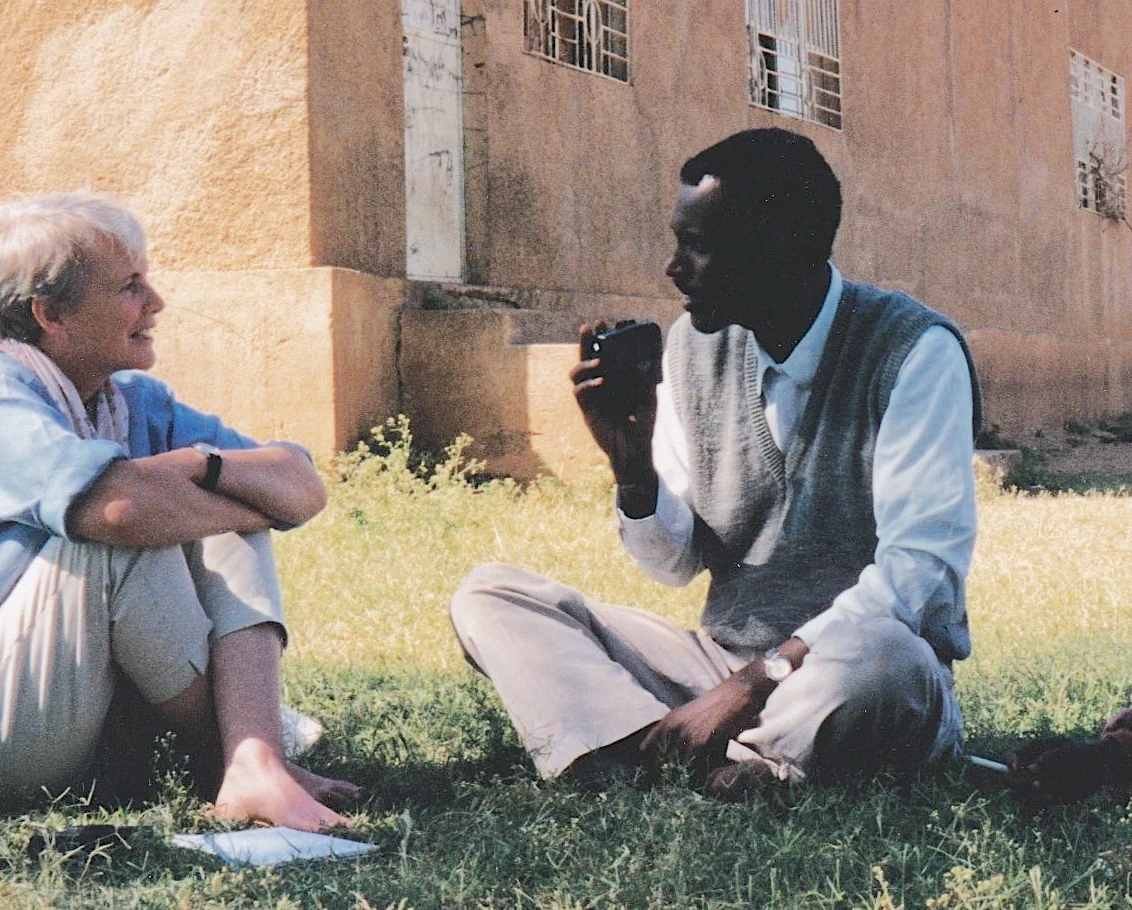
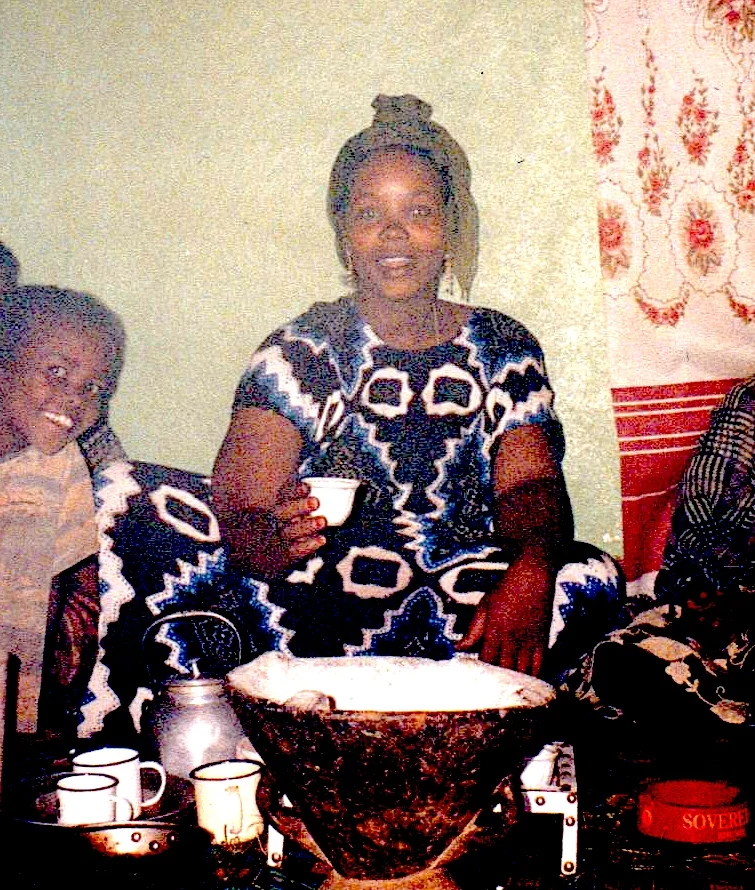
The road to Jijiga was notorious at times for attacks by shifta (bandits), and the day before we were due to leave Harar, a bus had been hijacked and the passengers had been robbed and shot. We were normally on the road soon after sunrise, but Tekle wouldn’t leave Harar until he’d spent some time at the bus station, where he could see with his own eyes that the buses from Jijiga were making it through the dangerous pass without incident. He had already been to the police station the night before, where the police had told him that the hijackers had been rounded up and summarily executed, but he hadn’t believed them.
I was grateful to Tekle for being so cautious. I knew I could trust his judgement.
The road from Harar to Jijiga winds round a hillside from which you can take a last farewell of the lovely little city and watch its walls slowly shrink till they are out of sight. For all Tekle’s researches, I could tell that he was still nervous. Usually quiet, he was explaining something to Mikhail (our young British Council translator) loudly and at top speed. The countryside grew wilder and the intervals between oncoming vehicles lengthened until we were the only car on the road. I felt my stomach tighten.
“See this bridge? This is where the bus was stopped. This is where they were murdered,” Mikhail said at one point, with ghoulish pleasure, and Tekle drew in his breath, sucked his teeth and shook his head.
The scene looked quiet enough to me. Beside a pool in the shallow river, just under the bridge, some women with black cloths wound round their heads were beating clothes against the rocks, watched by a few men squatting under the trees. But Tekle was taking no chances. He pumped on the accelerator and we roared past.
We now entered a truly scary landscape. The hillsides rose steeply on either side of the road. Boulders lay in tumbled heaps or were piled in gravity-defying towers, as if arranged in a giants’ game. The scraggy trees were undamaged—a sinister sign. It had clearly been years since anyone had come here to forage for firewood.
Tekle was silently gripping the steering wheel.
“This certainly looks like shifta country,” I remarked, sounding more squeaky than I had expected.
I hadn’t meant to be witty, but Tekle nervously guffawed in response and started driving even faster.
Then suddenly a Land Cruiser was hurtling towards us. In its open back men in uniform were huddled round a machine gun on a central platform over which crouched a hooded figure. Behind this vehicle came another car with smoked-glass windows.
“President of Somali Region,” said Tekle scornfully, reading the number plates, and he hunched further down over the steering wheel.
This is mad, I told myself. I’m risking my life, and Tekle’s, and Mikhail’s, for the sake of a few stories.
At last, the defile opened out into a plain, and when we had crossed this and climbed a hill to a busy village, Tekle threw his hands up, then smacked them down again with relief on the steering wheel.
“Shifta baka,”* he said triumphantly.
From then on, we fell back into our usual conversational pattern, with stretches of silence interrupted by a few questions from me, and the occasional remark from Mikhail, who dozed in the back of the Land Rover, leaving me to enjoy the landscape.
This was beautiful. We were now winding down through low hills. Occasional camels grazed among the bushes, herded by young women in bright clothes. And then the road straightened and we were drifting down a sloping plain which was dotted with the basket huts of nomads, towards the dusty little town of Jijiga.
* No more bandits.
The Porcupine Man
Two attempts to reach Assosa, a translator with a gift for words, and a Gumuz story that still haunts Elizabeth Laird.
Written by Elizabeth Laird and adapted from The Lure of the Honey Bird (Polygon 2013).
Road building in Ethiopia has advanced in giant leaps in the past three decades, and an asphalt road now runs from Addis Ababa to Assosa, the lifeline of the Benishangul-Gumuz region. But in 1998 the road beyond Nekemte was untarred. After heavy rain, it was quickly churned into a morass in which trucks, buses and cars wallowed like beached whales. There were two others in the British Council Land Rover—Mikhail Negussie, the translator, and Tekle, our driver—when I set off to collect stories in Benishangul-Gumuz. We broke our journey for the night in Nekemte, waking to bright sunshine. But as we drove west a curtain of rain came sweeping towards us.
At first, the wet road looked passable, but rounding a bend we ran into trouble. Lorries were floundering in mud, which rose in toffee-coloured waves over their wheels. Tekle clapped his hands to his head and pulled up. Mikhail jumped out of the Land Rover and ran ahead to see what was happening. The road was a morass for the next fifty kilometres, other drivers told him. Some people had been stuck for days.
“That’s it. We’re turning back,” I said to Tekle.
He grinned, relieved, and whipped the Land Rover round with a spin of the wheel. But we were too late. Several following lorries had come up behind us and were stuck. We could only wait.
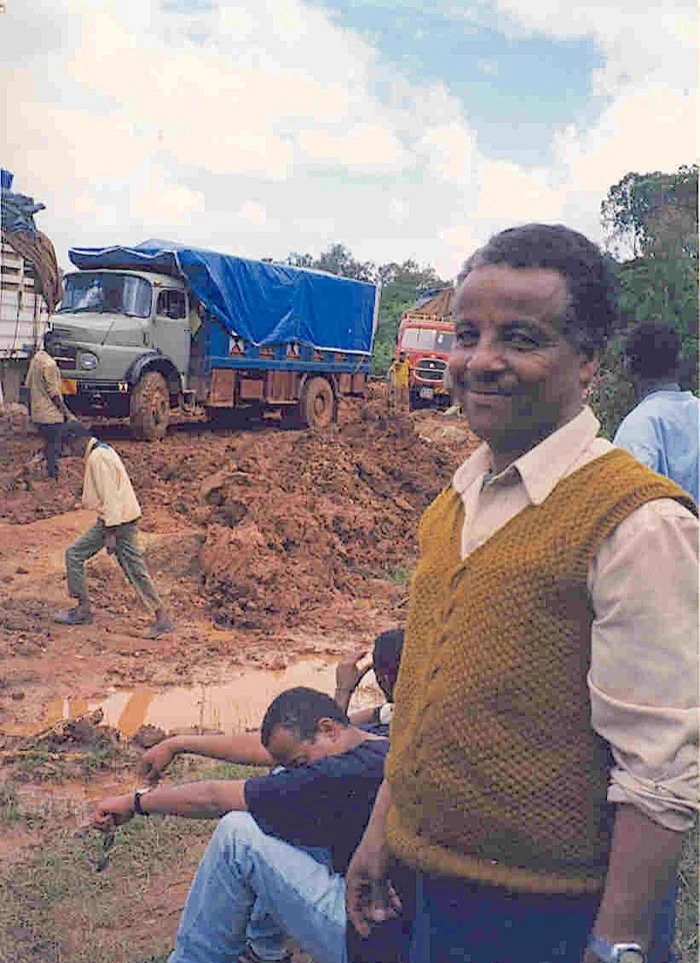
It began to rain again.
“No hotel tonight,” said Tekle. “We stay here, in the car.”
Thanking Providence that I had brought a sleeping bag, I resigned myself to fasting for the next twenty-four hours at least.
“We have spare time,” Mikhail said brightly. “I will give you a lesson in Amharic.”
Sourly, I turned the offer down. Hours passed, and then an ancient khaki lorry appeared, Russian-made. It forced its way past the logjam, spouts of muddy water shooting up from behind its massive wheels. That’s it, I thought. If you’re big enough and ugly enough here, you get to push ahead, no matter who else is in trouble.
But when the lorry reached the head of the queue, a man jumped out of it. He attached a tow rope to the front of the first truck in the queue, leapt back into his cab and revved his engine. Then I saw that the first three trucks were roped together. The driver of the Russian lorry was trying to free them all at the same time.
He nearly made it. Amid shouts of encouragement, he gained a few metres of ground. The three trucks jerked along behind him, then he slithered sideways until, tilting dangerously, his lorry was embedded in a deep rut.
Hopeless, I thought. We’ll be here for a week.
“Let’s walk back to that town we passed. Ghimbi, wasn’t it?” Mikhail suggested.
“Ghimbi ten kilometres from here,” said Tekle. “It is dark soon. Too many bad men. Lions.”
Mikhail subsided.
And then, magically, the Russian lorry backed out of its ditch. The tow ropes were reconnected. Engines roared into life, and all four vehicles lurched to the top of the hill. The rain stopped. Someone in front signalled us to take our chance. Two other small four-wheel-drive vehicles were ahead of us, and I watched them, heart in mouth.
The first, hesitating at a crucial moment, halted momentarily, but a crowd of volunteers, already plastered in mud, leapt to the rescue and pushed. It lurched but staggered on. It was our turn. Tekle revved the engine. I shut my eyes and prayed. A few minutes later we had made it through the bog and to the top of the rise. Deeply relieved, we set off back along the road to Addis Ababa.
A year later, I tried again, this time with Mesfin Habtemariam as the translator. Not daring to attempt the road, we met at the airport to board our flight to Assosa.
“Mesfin is famous,” I had been told. “A funny man. A writer. He talks on the radio. Everyone knows him.”
I found Mesfin in the café, waiting for our plane to be called. He sat with easy grace on a bent cane chair, studying me with his long-lashed eyes. His wavy hair was cut en brosse above his square forehead. He had the yellowed teeth and husky voice of a lifelong smoker and wore his shiny brown suit with such an air that it might have been cut by Armani. He clicked his fingers to summon the waiter in the manner of one used to frequenting cafés.
“My grandfather,” he told me, “was Armenian. You see how I look like an Arab? The hair? Not curled, but waving. And pale skinned, you see. He worked for the Emperor Menelik—I mean my grandfather.”
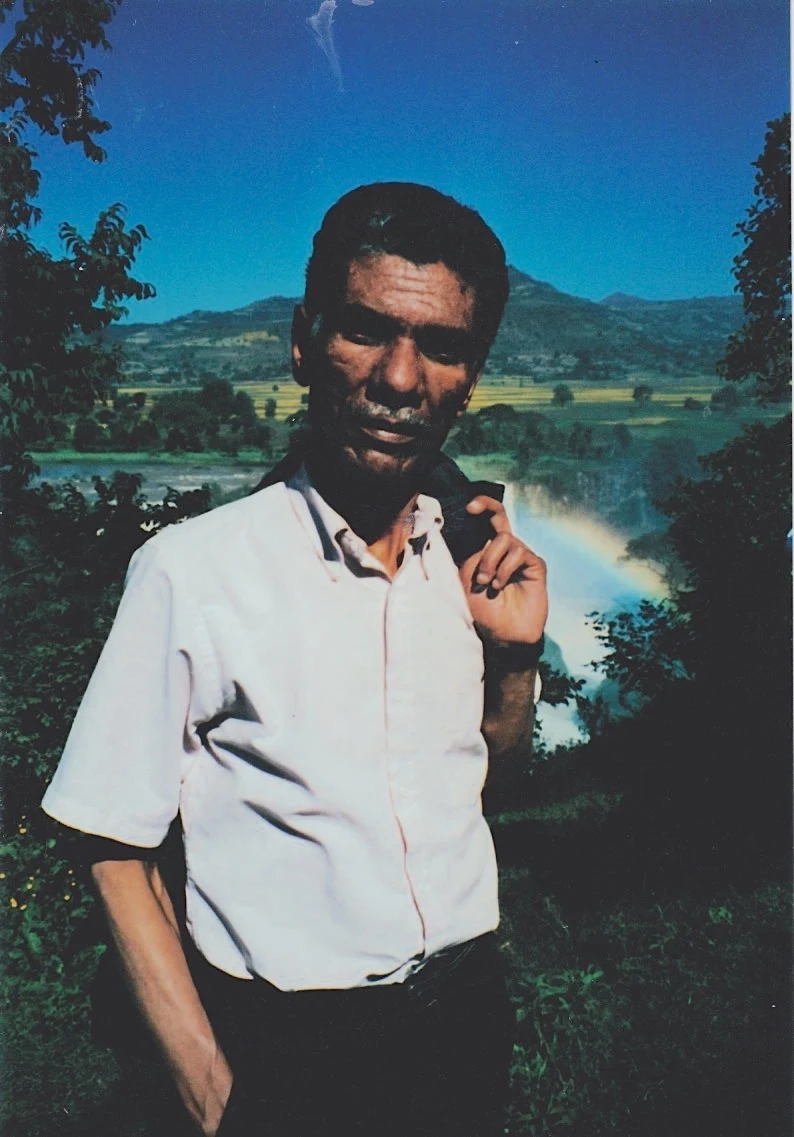
It was fun, working with Mesfin. Although he had travelled widely abroad, he had rarely been anywhere in Ethiopia outside Addis Ababa. Once in Assosa, acting the city sophisticate, he exclaimed at everything.
“Look, Liz. A bus! How did it come so far? And there are shops! The children! Just like kids anywhere.”
Mesfin would be a dedicated and thoughtful translator. In love with words and stories, he was a literature man, through and through.
Our guide and helper in Assosa was Dires Gebremeskel. The son of a priest, he had started his education in a religious school, studying to become a deacon, but once transferred to a state school, he worked his way up to become a teacher, and was posted to Chagni, in Benishangul-Gumuz.
Of all the fascinating encounters we were to have in Benishangul-Gumuz, the story session in a Gumuz village is the one I remember best. The people were wary of us. Harassed for centuries by slave raiders, the Gumuz had never lived in settled communities until forced to do so by the government. Fearing the loss of their own culture and traditions, they felt under constant pressure from interfering officials telling them how to build their houses and which crops to plant.
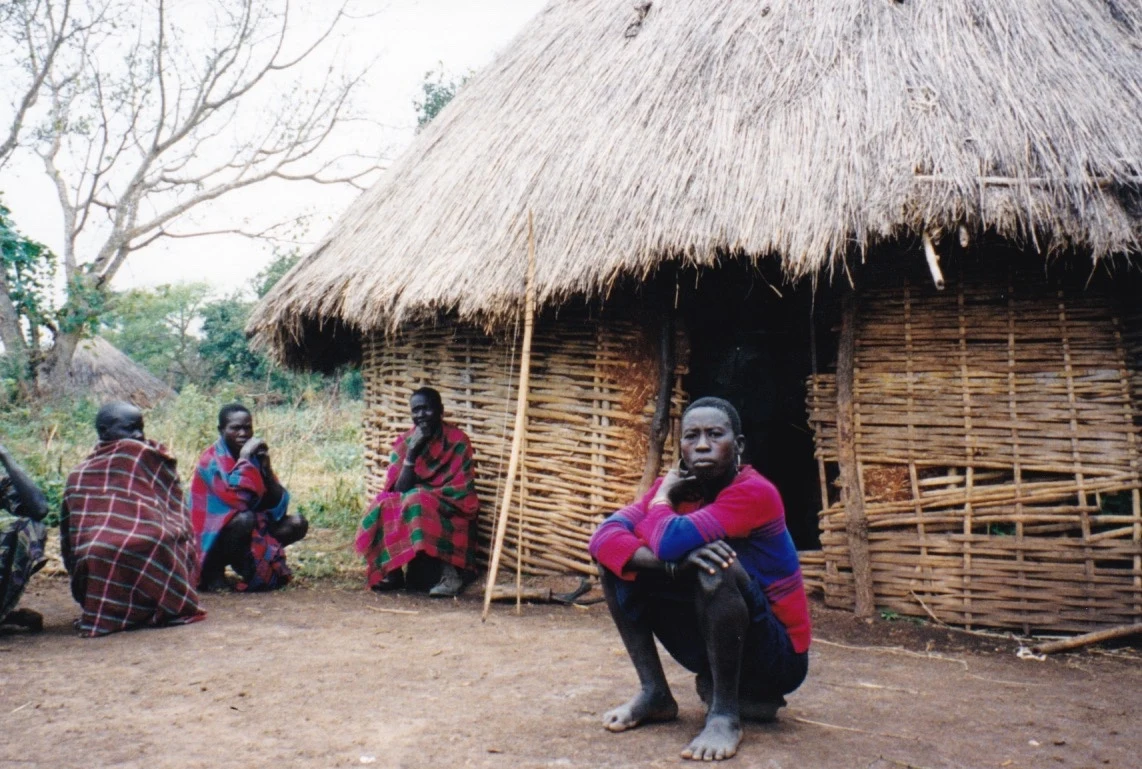
“The polio team has already come today,” Dires told us, seeing the suspicion on the faces of the villagers. “They don’t understand what we want.”
I could hardly blame them. First a bunch of strangers comes round and forces everyone to eat a sugar lump, then a ferenji appears demanding stories, and it was still only nine o’clock in the morning. Whatever next? I imagined them thinking.
But it was in that village that I heard a story which still haunts me.
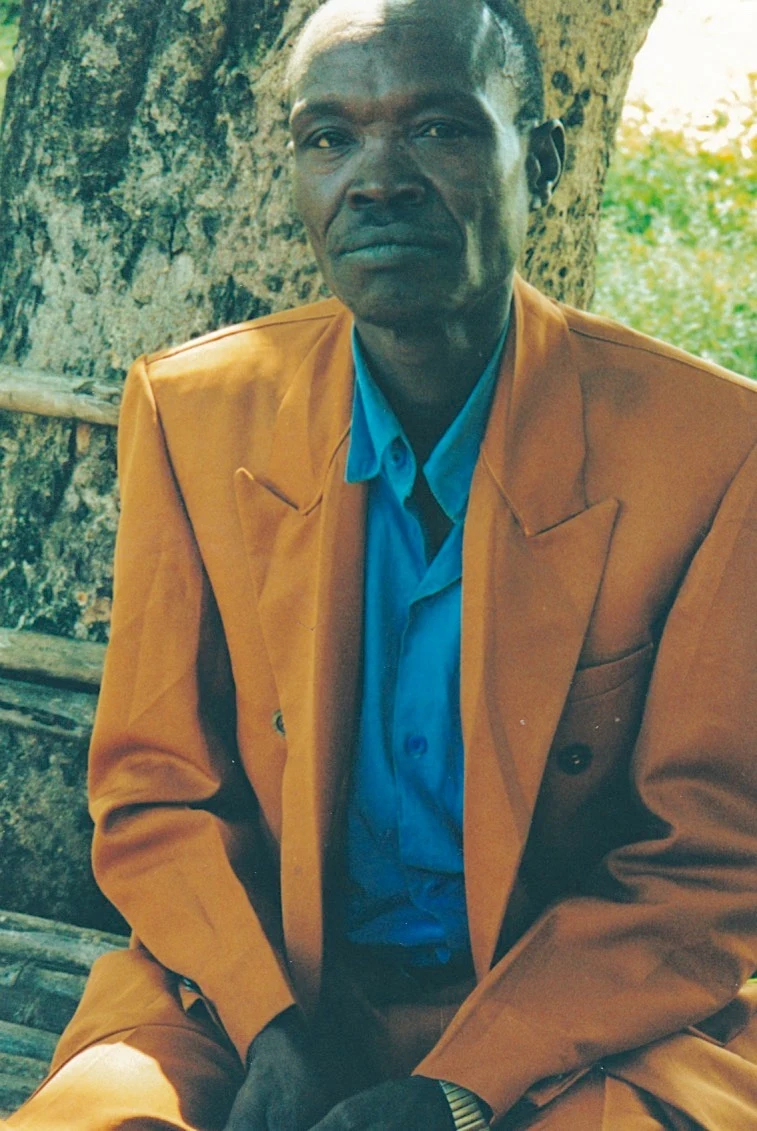
A honey hunter walks in the forest to find honey, but his hoard is stolen by a porcupine. He follows its trail to a cave, in which sits a zar (an evil spirit).
“I want my honey,” the man told her. “The porcupines have stolen it, and I’m going to kill them.”
The zar is angry. She turns him into a porcupine and spines grow all over his body. He runs to find his family but on the way he passes through a fire. The spines burn off him, and to put out the fire, he jumps into a lake. When he comes back to the shore he looks like a man again.
But he is now neither a man nor a porcupine. He lives among the bushes, gathering his food. He cannot speak like a man. He is lost. He lives like a savage. He still lives there, in the forest. He is there.
I shivered at this story of a lost soul living on the fringes of human society, unable to speak. Would such a person today, in our society, receive a medical diagnosis of some kind? Would he be cared for? Or would he be living on the streets of a big city, “with the soul of a porcupine”?
Read Belay Makonnen’s story as preserved in the original collection: The Honey Hunters – the Lost Soul, and in simplified English: The Honey Hunter.
The Man Who Grew Feathers
A storyteller in Kuyu, a tale of fairness and forgiveness, and an encounter with a sacred object whose meaning resists easy explanation.
Written by Elizabeth Laird and adapted from The Lure of the Honey Bird (Polygon 2013).
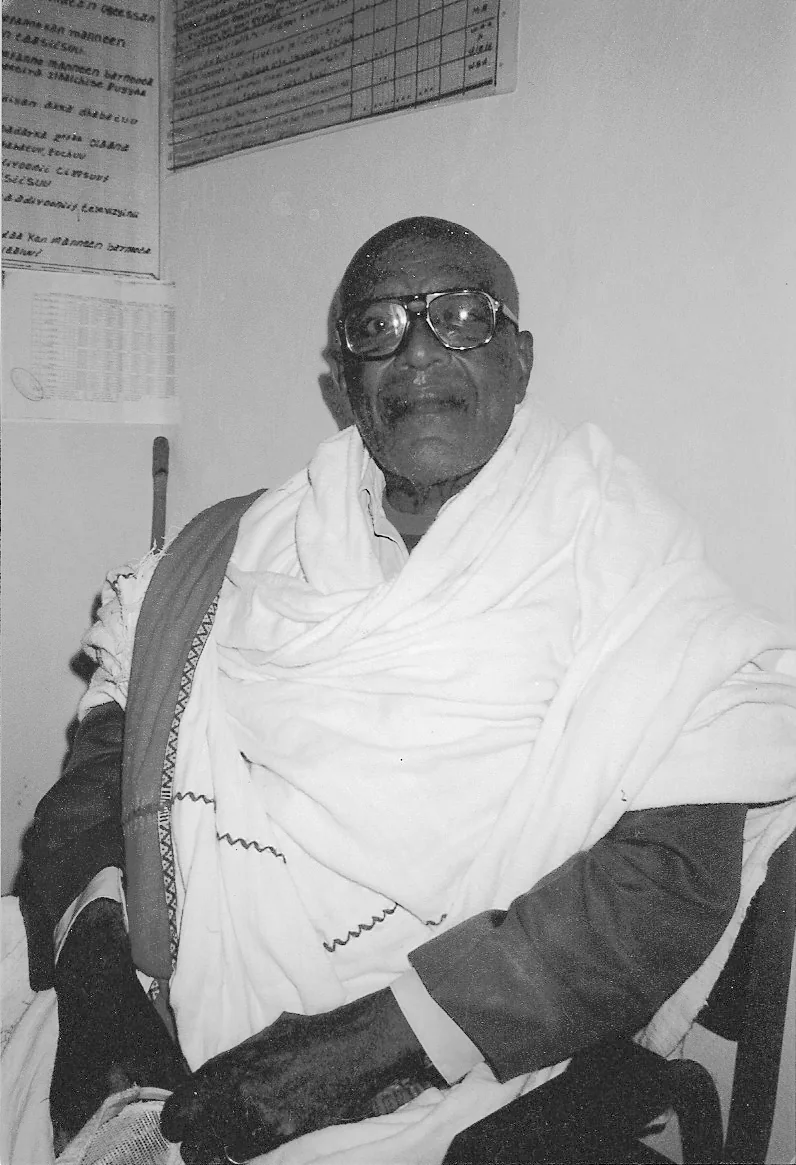
As the distinguished Ethiopian economist, Dr Berhanu Abegaz points out, quoting statistics about Ethiopia is a mug's game. It's particularly tricky to state the percentage of this or that Ethiopian minority. However, it's probably true to say that just over one third of Ethiopia's population is Oromo, and Oromia is by far the most extensive of all Ethiopia's regions.
Our story collecting in Oromia was organised by Merga Debelo. In his gentle way, he described for me the Gadaa system of government—a generational system in which men’s responsibilities change and increase through a series of grades, with leadership rotating every eight years. In fact, I would find a special quality in the Oromo stories I collected, in which fair dealing and peaceful resolution of conflict were recurring themes.
Merga had arranged for me to meet an old man in Gebre Guracha who was thought to know many stories. I knew as soon as my eyes had adjusted to the gloom inside his small house that our visit would be fruitless. Grass had been strewn on the floor in preparation for our coming and a young woman shyly handed round bottles of soda, but the old man himself looked from Merga to me with the vague, sweet eyes of senility. I knew that look. I wanted to sit down beside him, hold his dry old hand and tell him that everything was fine, as I had done so often with my bewildered father.
The old man could tell us only that he had been ill and his daughter had died, and relatives were looking after him.
Merga shook his head as we left the little house.
“It is very sad,” he said. “Not only for him but for us also. He knew many wonderful stories. Who will remember them now?”
I felt a renewed sense of purpose. Most of the storytellers we had met had been in late middle age or older. I felt that I was catching by the tail-feathers birds that might fly away.
The next day, Merga arranged a meeting with several old people, four men and one woman, who greeted me enthusiastically.
Worku Debelo was the first to begin. He had the bearing and dignity of an elder, and sat comfortably on his chair. Like the other men, he wore a thick shamma over his shirt and jacket. It was snowy white, with an intricate coloured border. His eyes were sharp and intelligent behind his glasses.
“A rich man had two sons,” he began. I settled back. The session was away.
In Ato Worku’s story, the rich man leaves all his cattle to his first son, and nothing to the second except for a brightly coloured rooster. The rich brother falls ill. He claims that the only medicine that will cure him is the meat of a coloured rooster. Generously, the impoverished man slaughters his rooster in order to save his brother's life.
The rich brother regains his health, but after a while feathers sprout all over his body. Terrified, he asks advice from the elders who tell him that he is being punished for his unfairness in taking from his brother the only thing he had. He must take to his brother a keleche as a sign of forgiveness. If the wronged man spits on it, it means that he forgives his brother, who will be cured.
The rich brother does as he is told, the poor brother spits on the keleche and the feathers fall away. The elders instruct the rich man to give his brother one of his three stables of cows, and they live in harmony from that time.
Merga was embarrassed by my insistent questions on the nature of the keleche. He answered vaguely that the keleche only appeared on two occasions in public: when there is a reconciliation ceremony, of the kind that had cropped up in the stories I had been told, and when a girl refuses to marry a boy. If he takes the keleche to her house, she has to submit to him.
I pieced together, in the end, that the keleche is a sacred object pertaining to old Oromo religion. It's made of shiny metal and each group of four or five villages would have possessed one in the old days. A respected elder who knows its secrets keeps it hidden in his care and hands it on, not to another member of his family but to another old and respected man. In some regions it's worn round the head as a band with a projecting phallus (which perhaps explained Merga's reluctance to describe it).
I wasn't sure, as I sat in the Land Rover on the way back to Addis Ababa, that I was much the wiser. As in so many other areas of Ethiopian life, I had to admit that I was woefully ignorant.* I remembered Michael Ambatchew's warning that politics had a great deal to do with a perception of the old customs. In the long centuries of imperial Amhara domination, the old ways of the Oromo had gone underground. With the growth of Oromo power and confidence, they are coming up once more into the daylight, but in the many differing Oromo communities, spread over such a vast area of Ethiopia, differences of interpretation are inevitable.
All I could be certain of were the stories. In their simple narratives of brothers, fathers, mothers and daughters, they have carried within them old ideas and ways of seeing the world, some spelled out clearly and some almost hidden, like the mysterious objects on which so much ritual and ceremony had always depended.
Read Worku Debelo’s story in the collection: The Man who Grew Feathers, and in simplified English: Fine Red Feathers.
* I had been politely reminded more than once that “Gebre Geracha” was not the correct name for the town we'd stayed in. Its Oromo name is Kuyu.
Sow Your Watermelon Seeds
A remarkable Gurage house, a storyteller in a Stetson, and a tale about ambition, greed and learning to live well.
Written by Elizabeth Laird and adapted from The Lure of the Honey Bird (Polygon 2013).
In a country where most people have always been farmers, the Gurage people stand out as merchants and traders. They can be found in towns and cities all over Ethiopia running shops, operating businesses and importing and exporting goods. Wherever they have gone, they have learned to speak the local language and have adapted easily to local customs.
In their own heartlands, around their capital Welkite, some Gurage people still farm their land. Their crop of choice is ensete, which is drought resistant and produces carbohydrate-rich food from its pseudostem and corm. The ensete's tall, broad-leaved shape resembles a banana palm, and it's widely known as “the false banana”.
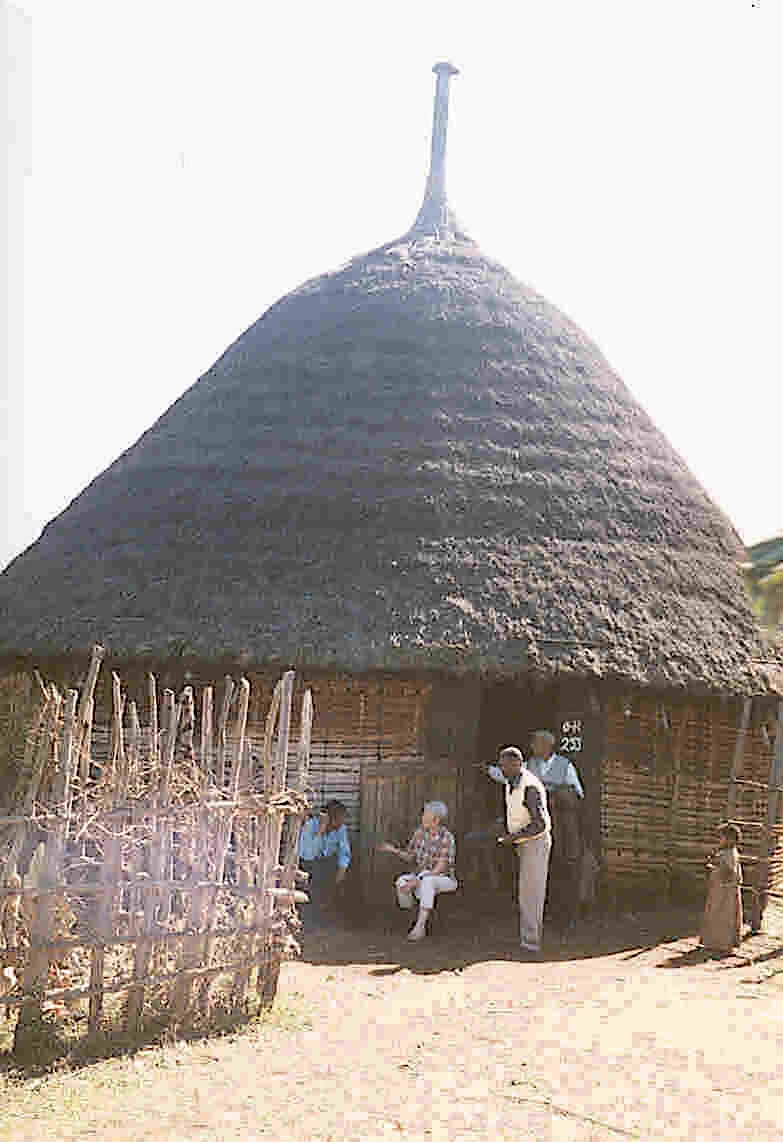
I found the dome-roofed house into which I was welcomed in a Gurage village among the most remarkable of the many architectural joys of Ethiopia. When I stepped inside, I could only look up and gasp. A massive mast of wood rose from the centre of the floor, almost disappearing into the high roof. It was like the pillar of a cathedral, the wooden spokes which sprang from it creating an effect of fan vaulting. These were tied laterally with cross beams and thatch was laid on top. A wall of hewn planks divided the interior space in two. The cattle were housed in the back part, along with the cooking area and store. There was barely any furniture, seating mainly being provided by the raised bench of mud along the walls. The walls and the wide expanse of floor were perfectly finished with an application of smoothed mud, which had also been used to mould the fireplace in the middle. Created from the materials at hand — mud, sticks and thatch — such houses leave a light footprint on the land but are beautiful, commodious and perfectly suited to the climate.
Even in 2001, when I visited Welkite, I was struck by how energetic the city was. With its excellent small hotels, telecom installations, postal service, well-stocked shops and a magnificent public library, it was eagerly pushing towards the modern world.
At the turn of this century, in many parts of Ethiopia, the most common vehicles on the roads were the white Land Cruisers and Range Rovers of foreign NGOs, dashing importantly about the country (as indeed we were doing in our rather more staid British Council Land Rover) transporting foreigners from one project to another with bright ideas cooked up abroad and pockets full of aid money. In Welkite, the NGO vehicles were less evident. This town was going somewhere fast, under its own steam.
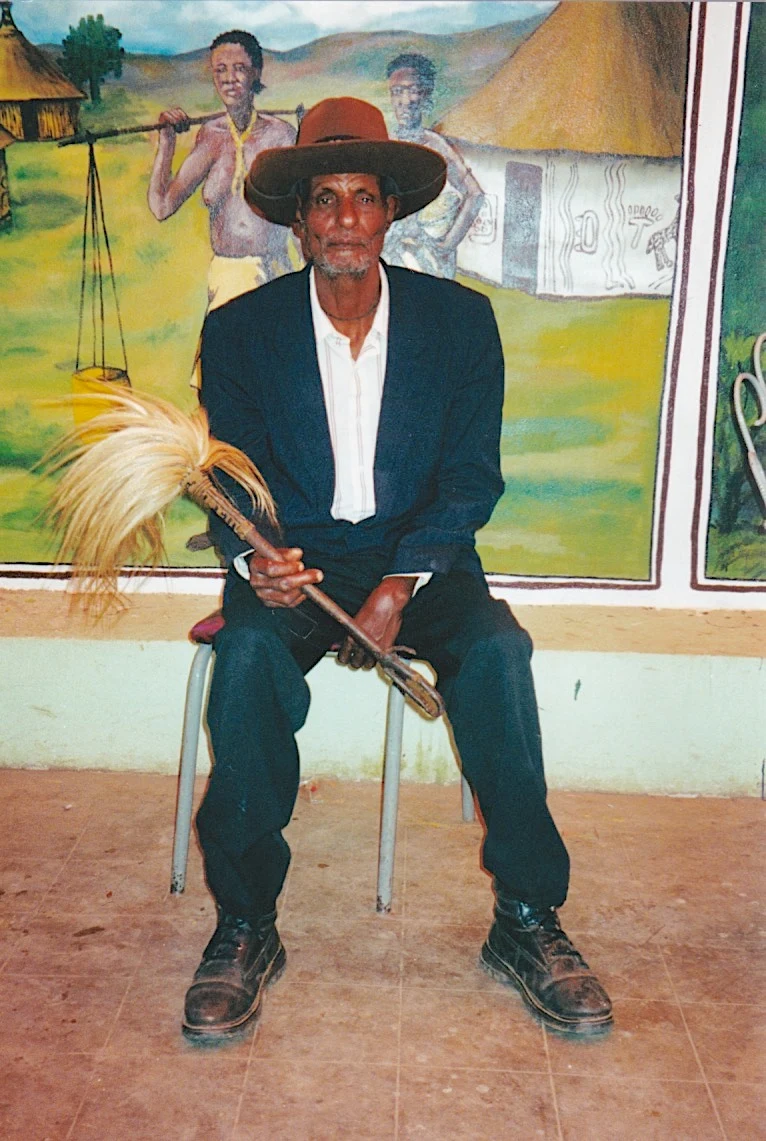
Here is my favourite story from Gurage. It was told by Shirguma Soraga, a lively old man wearing a Stetson and carrying a flywhisk.
The hero of his tale is a poor man who meets a beautiful woman while travelling down the road.
“What are you seeking?” she asks him.
“I want to work and become rich.”
“I will make you rich,” she says.
She gives him watermelon seeds and tells him to plant them on a hill. As he climbs the hill, he sees a man collecting firewood. But this man is gathering more and more sticks, too many for his bundle, which is now impossible to lift and carry.
“Why don't you take some sticks off your bundle so that you can carry it easily?” the poor man asks him, but the stick gatherer tells him to mind his own business.
Next the poor man passes a farmer cutting his crops with a sickle, but instead of harvesting only the tef, which is ripe, he is cutting the unripe barley too.
“Why don't you leave the barley to ripen, and only harvest the tef?” the poor man asks, but the farmer tells him to go away.
He sees a third man trying to push a rock up the hill, but the rock is so heavy that it cannot be shifted by so much as an inch.
“Are you crazy?” says the poor man. “You'll never be able to move such a heavy rock.”
“What's it to you? Leave me alone,” the rock pusher replies.
The poor man comes at last to the field and sows his seeds. On the way home he meets the beautiful woman again. He tells her about the three men and the strange things they were doing.
“The first was a moneylender,” she explains. “He is never satisfied with what he has but demands more and more. The second man is death. He kills the young and old alike, taking the weak and the strong, the rich and the poor. The third man is one who is too ambitious. He wants to be rich and is weighed down by the cares of his desires.”
“So what should I do?” the poor man asked.
“Sow your watermelon seeds. Care for them. Harvest them, and you will become rich.”
Shirguma tapped his stick on the ground as he ended his story, and smiled as he recited the closing formula.
“Biya waret bahe kerach. Good sleep for me, and may the fleas all jump on you.”
I'm struck, once again, by the wisdom in this story. It's a warning against capitalist greed, which now, more than ever, is threatening the structure of western society. When Shirguma Soraga told me this story, watermelons were becoming a modest cash crop in Ethiopia. The watermelon farmer could make a profit, but he would never be “rich”. Perhaps a better translation of the ending would be, “And you will live well,” rather than “And you will be rich.”
That's the lesson I'll take from it, anyway.
Read Shirguma Soraga's watermelon story as preserved in the original collection: The Poor Man and his Luck. A different story of his appears in simplified English as The Lazy Family.
The Bard of Bonga
A young storyteller in Bonga, an impossible royal command, and a tale in which oral memory preserves its own history.
Written by Elizabeth Laird and adapted from The Lure of the Honey Bird (Polygon 2013).
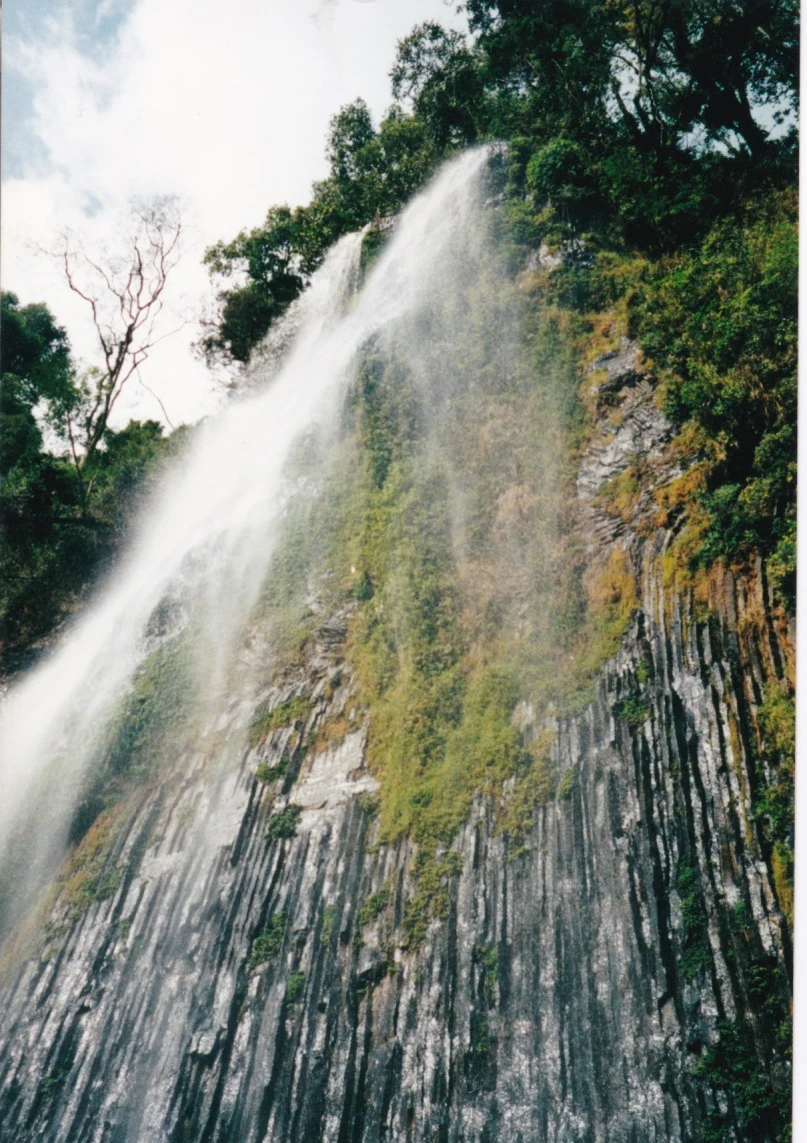
The Kingdom of Kaffa dates from the fourteenth century and its history is long and complex. It lay on a great trading route, between Shoa to the north and Sudan to the west. It reached the zenith of its power at the end of the eighteenth century but a hundred years later fell victim to the Emperor Menelik's expansionist ambitions. Its last king was defeated in 1897 and taken in silver chains to Addis Ababa and Kaffa was incorporated into the Ethiopian empire.
“We were a great nation once,” the regional cultural officer, Yacob Woldemariam Dimeno, said to me wistfully.
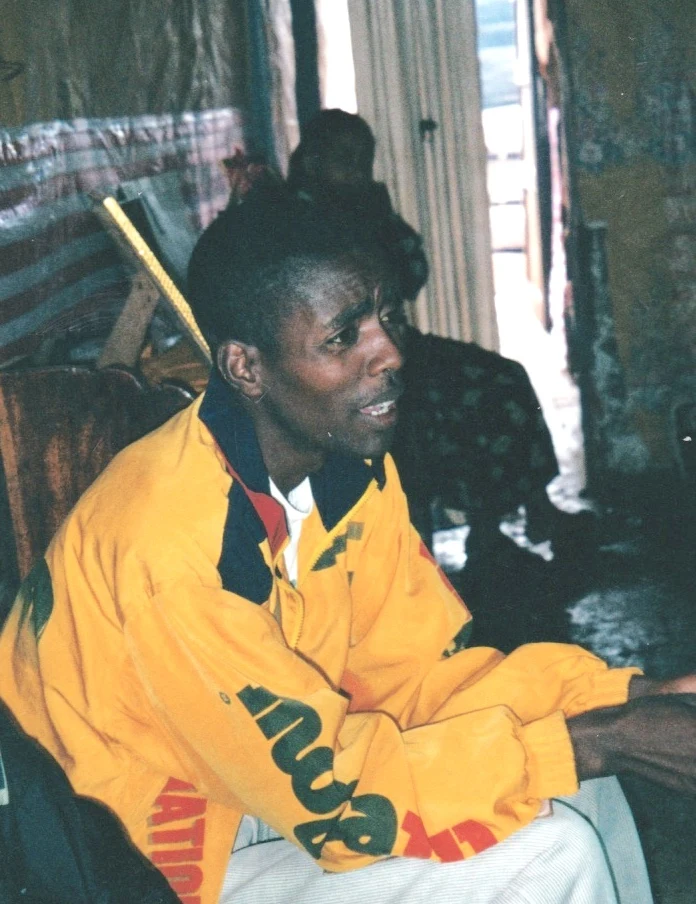
During our first story session in Bonga, a young man had been sitting quietly, listening to the others, but after some time he cleared his throat and indicated that he had a story to tell. I looked at him properly for the first time. He was wearing a lemon-yellow shell suit and his hands fluttered as he spoke. He looked eighteen or nineteen, young to be the carrier of Kaffa's oral treasures. His name was Worku Alemu.
“He is a special person,” Yacob explained. “His ancestors were storytellers to the kings of Bonga.”
“You mean like bards?”
“That is it, exactly! This boy learned the stories from his great uncle. He is determined to preserve them.”
Worku blinked nervously while this explanation was going on, but when he started speaking, his voice was full of confidence.
His first story had a plot as complete as any in the Decameron. Shakespeare might have knitted it into a play. It starts in the good old way with a tyrannous act by the King of Kaffa, who becomes suspicious of his advisors and murders or drives into exile their entire tribe, the Mattos, except for one little boy who escapes and is brought up in hiding with a humble tribe of outcast tanners.
The king wants to build a palace grander than any seen before, and for this he needs a central pole to hold up the roof. He orders his servants to bring him the longest pole in the world, one that will reach the sky, and not to return without it on pain of death.
His terrified servants spend ten years in the forest, living on berries and the flesh of wild animals, searching for a pole that will reach the sky. They do not even pause to clip their nails or cut their hair, which grows so long that it falls like robes over their backs. At last, exhausted, they give up and seek refuge in the very village of tanners where the Matto boy is now half grown.
The tanners are afraid of these strange people with claws for nails and hair so long, and they run away, but the Matto boy asks the strangers what they want.
They tell him.
“You mean you have been hiding in the forest for ten years for such a little problem?” asks the boy. “The solution is simple. Go back to the king banging a drum and singing ‘Yubbo, yubbo,’ a song of triumph. Say to him, ‘O King, may you live for a thousand years. We have got the pole you asked for. But we cannot be sure that it is the tallest pole in the world unless you give us a rod to measure it with.’ Do this, and see what the king will say.”
The advisors do as the boy suggests. The king frowns as he listens to them. He knows he has been tricked.
“Only one of those rascally Mattos could have thought of this,” he says, and orders the advisors to tell him who gave them the idea. They describe the Matto boy, and the king sends his soldiers to fetch the child.
Fearlessly, the boy confronts the king.
“You are right. I am Mattoni,” he says, “but I have grown up among the tanners to escape from death.”
The king is so impressed by the boy's wisdom and fearlessness that he repents his actions.
“I need you and your people to be my advisors,” he says. “From now on you will live with me in my palace and those in exile will come home.”
This story sounded to me like a poetic version of a historical reality. ‘Poetic history’ can be more influential — and potentially more dangerous — than objectively researched history. It can be an important source for academics attempting to uncover and record a nation's story, but it is full of pitfalls too.
The young bard of Bonga's tale of persecution and exile comes back to me whenever I hear of one of my old students from the 1960s, that generation of clever, idealistic, ambitious young Ethiopians who suffered in the terrifying purges of Mengistu Haile Mariam after the Ethiopian revolution in 1974. Many fled as refugees to Sudan and Kenya, or further afield to Europe and the United States, living like the Mattoni boy with the “outcast tanners” of the outside world. Sometimes I'm lucky enough to meet one of those who overcame the hardships of the refugee life, and have become settled and fulfilled in their work. I can only applaud their courage and perseverance.
Read Worku Alemu's story in the collection: Wisdom Rules, and in simplified English: The Longest Pole in the World.
The Birale Man
South of Jinka, the search for a storyteller becomes an encounter with a language—and an identity—on the edge of disappearance.
Written by Elizabeth Laird and adapted from The Lure of the Honey Bird (Polygon 2013).

A small settlement had grown up at the crossroads where the road to Jinka meets the southern route through the Omo Valley and on into Kenya. The only building of note was the police station, placed here no doubt in order to keep an eye on smugglers, although the town’s most disruptive visitors were probably the tourists on their way to view the elaborately dressed peoples of the Omo Valley. The only other signs of habitation were a few mud houses surrounded by thorn fences.
We were on the hunt for Birale storytellers. One of the unsung tragedies of globalisation is the death of languages. No one knows how many there are in the world, though experts calculate the figure to be around 6,000. Of these, UNESCO estimates that around 2,500 are endangered and are likely to die out altogether within a century.* This mass extinction is happening under our noses and with barely a sigh of regret. It is estimated that around 75 languages are spoken in Ethiopia, but many of these must be on the verge of being lost, along with their stories and their poetry, their history, their grammars and sound systems, their proverbs, riddles and the unique world view they enshrine.
We had been told that only seventy members of the Birale people were left alive in the world, and of these only eight or nine could speak the Birale language. Our hope was that we might find one of them here, in this hot, dusty little town, and that he or she might be persuaded to tell us a story or two.
The arrival of the British Council Land Rover, containing the driver Tekle, the Amharic translator Mesfin and me, had not gone unnoticed by the pair of policemen sitting in the shade of a concrete wall. They rose to their feet and came over to investigate. The cultural officer in Jinka had thoughtfully provided us with a letter for the police captain, explaining our mission. He read it through a couple of times.
“The Birale village is too far away,” he told us. “Three or four hours by walking.”
He assured us that if he had known we were coming he would have sent for someone to meet us. It wasn’t easy to catch hold of a Birale. They were rare creatures and only seldom came into town.
At that point, two women, who had been sitting under a tree near the police compound, and who, by a process of aural osmosis, had gathered what we wanted (although I would have thought they were way out of earshot), called out that a Birale speaker was walking past the police station at that very moment. They ran off to catch him.
I could feel myself breaking out into a sweat of excitement. Yet again, I was conscious of treading in the footprints of the Brothers Grimm, catching at the tail feathers of stories before they took wing and fluttered out of sight forever, but never before had I been on the trail of something so rare and thrilling.
The women returned to their vigil under the tree and the Birale man came towards us at a trot. He was small with a wizened face, flared nostrils and heavily lidded eyes through which he watched us warily. His tan poplin jacket was very old and his knee-length trousers worn and frayed. His calf muscles looked as hard as if they’d been carved from mahogany and his bare toes were splayed, the nails as thick as horns.
By this time, we were sitting near the Land Rover under a small thorn tree, which offered only sparse protection from the grilling heat of the sun. Several rubber tyres were piled up at the edge of the road and a couple of young Tsemay men, who had appeared as if from nowhere, had perched on them and were watching what was going on. Their hair was intricately plaited and one wore a long feather stuck in his topknot, which undulated every time he moved his head. The other was loosely wrapped in a striped polyester cloth and when he stood up it fell away from his perfect young body to reveal his complete nakedness. His head was wrapped, turban-like, in a tartan cloth.
Mesfin, Tekle and I sat and gazed at the Birale man, not knowing how to proceed. It transpired that he could speak only Birale and Tsemay. We had no way of communicating. The minutes passed. This dilemma was soon resolved. More young Tsemay men had joined the pair on the tyres. One of these, who had had a few years of education, explained that he could speak Amharic and offered to translate for us. By this time we had moved into the shade of an even smaller thorn tree, no larger than a bush.
The boy translated our request for stories into Tsemay for the Birale man who peered at us doubtfully and muttered something.
“If he is to do something for you,” the Tsemay boy said, “he wants to know what you will do for him.”
As usual on these occasions I stared into the distance, pretending to be miles away, and let Mesfin take the lead, but I could follow the discussion. The incredible sum of 100 birr was being whittled down until at last it was agreed that, if he could tell us some really good stories, the Birale man would earn 30 birr.
The poor old man was under pressure now. He squatted with his arms resting on his knees, looking down at the dust as if inspiration might come from the ground. He began to speak haltingly in staccato jerks while the Tsemay boy translated. Mesfin and Tekle, educated Amharas from the big city, were shaking their heads in disgust.
“He knows nothing!” Mesfin burst out. “He is only saying how he was born in his father’s house, how his father gave him milk and sent him to tend the cattle. He doesn’t understand!”
We were asking too much of the old man and I was embarrassed. Mesfin could barely conceal his impatience.
“You know, stories about the clever fox and the hungry hyena,” I understood him to say. “What happened when the Creator made the world.”
The Birale man was sweating, desperate to earn the 30 birr. He made a couple of stabs at putting together something that might please us, but it was clear that he knew no stories at all.
“This is a dead duck, Liz,” Mesfin said at last. “He is just saying that hyenas chased his cows, he tried to kill them and they ran away.”
I was so hot that my shirt was clinging to my back. I couldn’t understand how Mesfin managed to look so cool in his white shirt and black trousers, balancing elegantly on a crude stool which someone had fetched out for him from the police station. My head was beginning to ache, I was hungry, and I was feeling ashamed at the way we had treated the distressed old man.
We gave him 5 birr in the end, which he pocketed with silent dissatisfaction, and away he went, half-trotting out of the police compound with the easy lope of a man used to walking over great distances. I watched him go up the path that led round the edge of the hillside with deep regret, not only for the stories he had been unable to tell, but for the sadness of his people whose language and very identity was in the process of being swept away.
* These figures are out of date and estimates are constantly changing.
Tellers named in the chapters above; the full roll of the record stands on each story's own page.
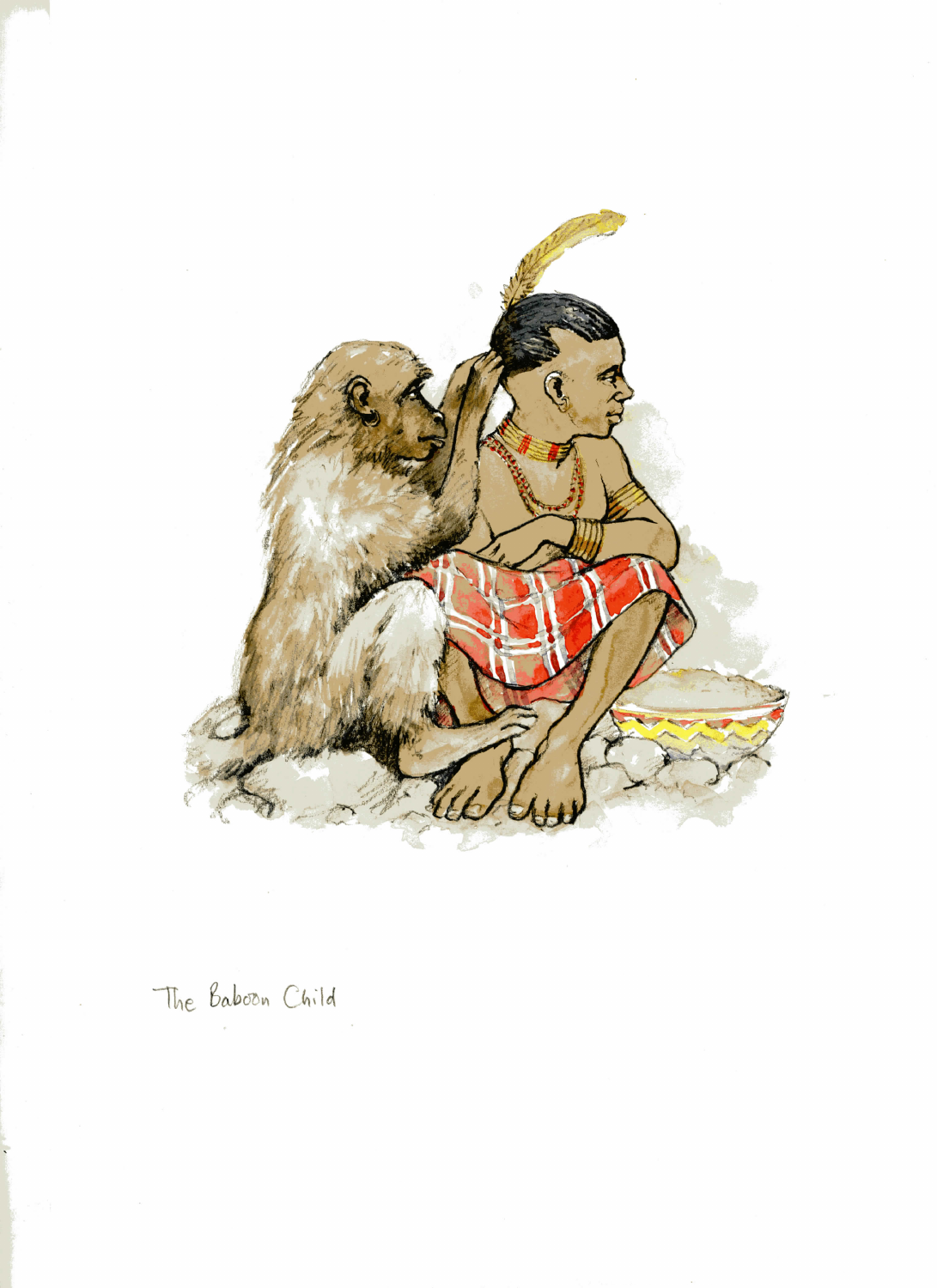
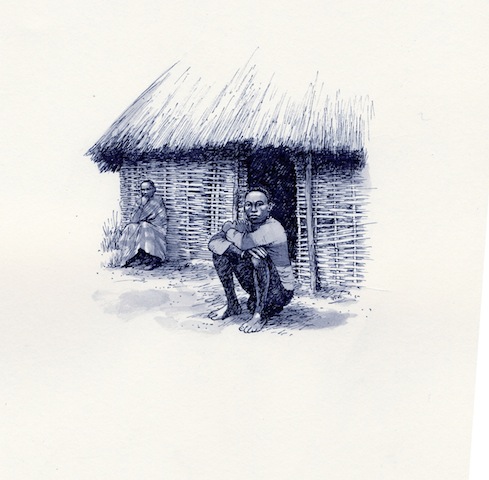
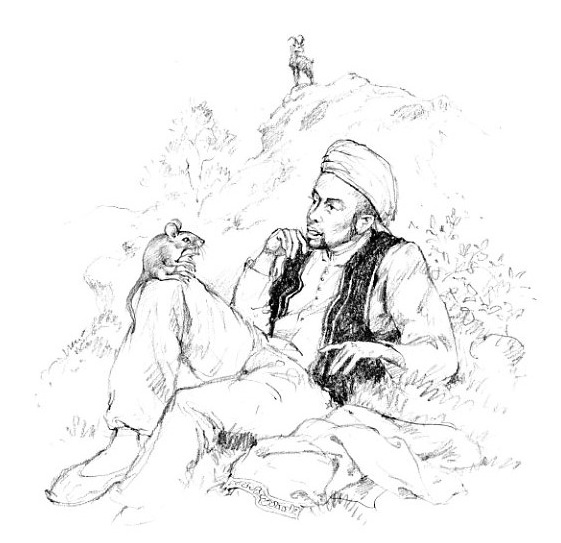
The itinerary is reconstructed from the Project’s original expeditions record as described in Elizabeth Laird’s account in The Lure of the Honey Bird (Polygon 2013), and the English slates on the surviving tapes. Town positions on the map follow the OCHA common operational gazetteer of Ethiopia (April 2026 release); positions not found there are marked. The recordings are the original tapes of 1997–2001 in a variety of Ethiopian languages. The accounts in Chapters 1 to 12 are written by Elizabeth Laird and adapted from The Lure of the Honey Bird. Their accompanying photographs were supplied from her collection; individual captions give the agreed credit. Set in Palatino. Prepared July 2026. Pen and ink drawings illustrating the stories are by Eric Robson.
Road alignments © OpenStreetMap contributors.
❦